
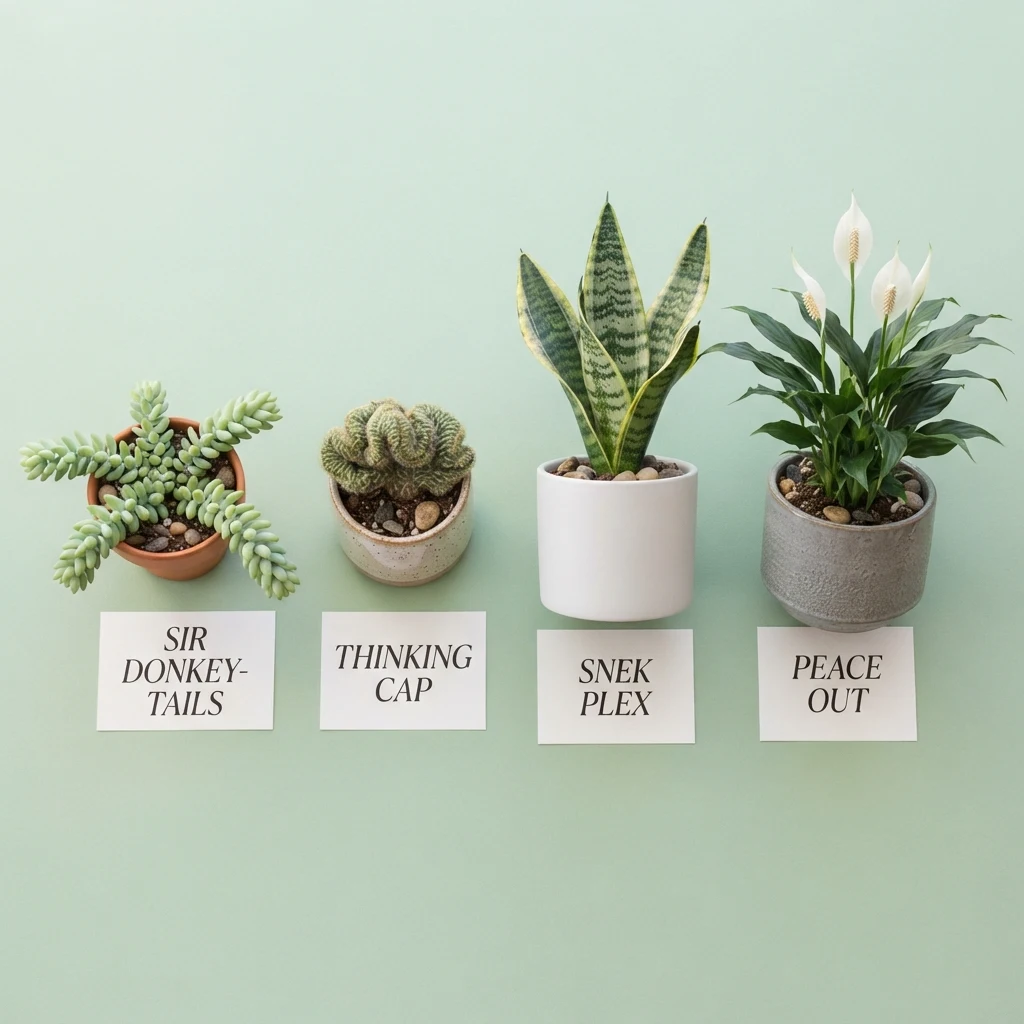
Fun plant names are playful nicknames or hilarious common titles given to botanicals based on their appearance, odd behaviors, or unusual traits. Whether you use official names like the Donkey Tail or give your leafy monstera a silly moniker like Sir Reginald, naming your greenery makes plant care far more entertaining and personal.
Have you ever looked at a quirky cactus or a dramatic fern and felt like it needed a real personality? Giving fun plant names to your green companion transforms ordinary houseplant care into an absolute joy.
Whether you prefer hilarious scientific common names or cute homemade nicknames, naming your foliage helps you build a genuine bond with your indoor garden. Discovering fun plant names gives your home space a cheerful spark that brings a smile to your face every single morning.
Get ready to explore the wild world of weird, silly, and deeply amusing botanical names. Let’s make your plant collection the most entertaining room in your house!
Why Giving Fun Plant Names to Your Green Friends Matters
Naming your houseplants might sound like a silly weekend activity, but it actually changes how you interact with your indoor jungle. When you assign fun plant names to your leafy pals, you stop viewing them as mere home decoration. They become living housemates with distinct quirks, moods, and daily needs.
Psychologically, giving your green companions fun plant names fosters a deeper sense of empathy and responsibility. You are far less likely to forget to water a leafy buddy named “Pothos Barnaby” than an anonymous green pot sitting on a dusty shelf. It transforms routine chore times into lightweight, cheerful moments of connection.
Beyond personal bonding, funny nicknames serve as incredible conversation starters when guests visit your living room. People naturally warm up to a room when you introduce your greenery with hilarious, humanized titles. It strips away the intimidating aura of botanical science and replaces it with pure, accessible joy.
The Psychology of Naming Objects
Humans love finding personality in non-human things around them. When we see a droopy leaf, we automatically assume the plant is feeling moody or tired. Assigning a name leans directly into this natural habit, making your daily environment feel warmer and far more friendly.
This process gives you a small sense of ownership and pride over your living space. Naming a fiddle-leaf fig gives it a spot in your daily routine right alongside your pets. You will quickly find yourself checking in on its health with far more enthusiasm every week.
How Quirky Monikers Improve Plant Care Routines
Consistency is the hardest part of keeping houseplants happy and healthy over time. When your plants possess hilarious titles, your memory triggers much faster when it comes to weekly feedings and waterings. You remember that your thirsty maidenhair fern needs attention because its name reminds you of its dramatic character.
It also turns plant care into a fun hobby you can easily share with kids or roommates. Assigning chore lists becomes funny when someone is tasked with wiping down “Sir Fluffington” instead of a basic dusty snake plant. It transforms basic maintenance into an enjoyable group activity.
Hilarious Real Botanical Common Names Found in Nature

You do not always have to invent silly names from thin air because nature beat you to it. Professional botanists have been sneaking subtle jokes and bizarre descriptions into plant catalogs for hundreds of years. Some of the most fun plant names come directly from official field guides and historical gardening records.
From plants that look like animal tails to species that mimic strange household items, nature has a fantastic sense of humor. Exploring these natural titles shows just how quirky the plant world really is.
- Donkey Tail (Sedum morganianum): A plump succulent with hanging trailing stems that look exactly like fluffy animal tails dangling over the edge of a pot.
- Mother-in-Law’s Tongue (Sansevieria trifasciata): Named for its tall, sharp, upright leaves that point straight upward with severe attitude.
- Rat Tail Cactus (Aporocactus flagelliformis): A bristly, drooping cactus with long tubular stems that closely resemble fuzzy rodent tails.
- Pig’s Ear (Cotyledon orbiculata): A thick-leaved succulent with thick oval leaves featuring red borders that look suspiciously like piggy ears.
- Shrimp Plant (Justicia brandegeeana): An unusual shrub featuring pinkish-orange bracts that resemble stacked, ready-to-eat sea crustaceans.
The Weirdest Succulents with Funny Titles
Succulents are famous for growing in bizarre geometric shapes, which often leads to hilarious descriptive names. Take the String of Turtles, for example, whose tiny circular leaves display shell patterns across every inch. Another classic choice is the Brain Cactus, a mutated stem that folds into squiggly patterns mimicking human grey matter.
These odd growth shapes make succulents the absolute easiest candidates for amusing labels. Their thick stems can withstand a bit of neglect, matching their tough, quirky names. Placing a couple of these oddballs on a sunny windowsill keeps your windowsill looking like a tiny fantasy land.
Quirky Ferns and Palms That Sound Made Up
Ferns bring plenty of drama to the table with their delicate, ruffled fronds and high humidity demands. The Fishbone Fern earns its title from its long fronds that mimic detailed skeleton bones stacked side by side. Meanwhile, the Staghorn Fern grows massive split leaves that look just like mounted deer antlers on your wall.
Palms join the fun too with species like the Ponytail Palm, which sports a huge woody trunk topped with a chaotic explosion of curly green hair. These wild visual traits make it super easy to match the plant’s natural vibe with a hilarious title that fits its look.
- Donkey Tail (Sedum morganianum): A trailing succulent packed with thick, teardrop-shaped leaves. (Fun Factor: High)
- Mother-in-Law’s Tongue (Sansevieria trifasciata): Features tall, rigid, pointed leaves with sharp yellow margins. (Fun Factor: Very High)
- Brain Cactus (Mammillaria elongata ‘Cristata’): Displays wavy, folded cactus stems that look just like brain folds. (Fun Factor: High)
- Staghorn Fern (Platycerium bifurcatum): Grows forked, leathery fronds shaped like wild deer antlers. (Fun Factor: Medium)
- String of Turtles (Peperomia prostrata): Covered in tiny rounded leaves featuring detailed turtle-shell patterns. (Fun Factor: Very High)
Punny Plant Names Based on Pop Culture and Celebrities
If natural common names feel a bit too traditional, pop culture puns offer endless entertainment. People love combining famous actor names, musical artists, and movie characters with classic botanical words. It gives your favorite leafy green a legendary identity that everyone recognizes instantly.
Using wordplay is one of the quickest ways to build fun plant names that stick in your head forever. You can pull inspiration from old-school rock bands, popular movies, or classic television shows you love to satiate-watch.
Famous Musicians Turn Green
- Spruce Springsteen: Ideal for a tough, woody evergreen or miniature pine tree sitting out on your sunlit balcony.
- Fernie Sanders: Perfect for an older people, fluffy fern that looks wise and slightly messy around the edges.
- Elvis Parsley: A great title for your kitchen windowsill herb garden that keeps rock and roll alive while you cook.
- Britney Spears: A perfect label for a sharp snake plant that stands tall, proud, and completely unyielding.
- Floriana Grande: Excellent for a stylish flowering plant that constantly steals the spotlight in your living room.
Movie Characters Reimagined as Foliage
Movie characters make awesome templates for naming your indoor collection. You can call your massive Monstera deliciosa “Monster Inc.” or name a tiny desk succulent “Baby Yoda” because of its compact green ears. If you have a plant that somehow survives every watering mistake you make, “The Terminator” fits its tough personality perfectly.
Think about the overall vibe of your plant when choosing a pop culture reference. A slow-growing cactus might fit a patient cowboy character, while a fast-vining pothos acts like an adventurous superhero spreading across your bookshelves.
Cute and Sweet Names for Gentle Houseplants
Not every plant has a wild, dramatic, or sharp appearance that calls for a bold joke. Some plants feature soft leaves, gentle pastel colors, and delicate trailing vibes that demand adorable, sweet titles. Matching gentle aesthetics with cute monikers creates a soothing atmosphere inside your home space.
Delicate plants like pink nerve plants, soft velvet calatheas, or tiny baby tears plants fit seamlessly into this sweet category. They feel like quiet home companions that deserve loving, gentle names.
Food-Inspired Names for Soft Leaves
Food names are universally adorable when applied to small, round, or velvety green leaves. They instantly make your houseplant collection feel cozy, soft, and completely charming to look at every single day.
- Mochi: Great for round, smooth succulents that look soft to the touch.
- Peanut: A wonderful name for a tiny, slow-growing baby cactus sitting in a clay pot.
- Pumpkin: Ideal for a round orange-tinted succulent or a chubby potted pepper plant.
- Bean: Simple and sweet for tiny trailing propagation cuttings just starting to form roots.
- Biscuit: A cozy title for a low-growing, compact plant with light green leaves.
Cozy Royal Titles for Pretty Pots
Giving your pretty plants tiny royal titles adds a splash of playful elegance to your plant stands. Calling a small succulent “Lady Penelope” or a potted rose “Prince Charles” turns your shelf into a tiny, regal kingdom. It balances sophistication with pure silliness in the best way possible.
Try combining formal titles like “Sir,” “Duchess,” or “Professor” with simple everyday words. “Professor Pothos” or “Baron von Cactus” sound instantly funny while giving your plants a royal reputation in your living room.
Royal and Noble Names for High-Maintenance Plants
We all have at least one plant that acts like total royalty in our homes. These are the fussy plants that drop leaves the second you move their pot two inches to the left. Giving these dramatic divas grand royal names helps you cope with their high-maintenance care routines with a smile.
Instead of getting frustrated when your plant throws a sudden fit, embrace its dramatic personality fully. Assigning a royal title transforms stressful leaf drop into an amusing theatrical performance by your resident plant monarch.
- Sir Drips-a-Lot: For that dramatic peace lily that wilts flat onto the table whenever it wants a sip of water.
- Queen Victoria: Excellent for a delicate maidenhair fern that demands perfect humidity and purified water at all times.
- Lord Fluffington: A great name for a bushy, oversized velvet plant that rules over your main window display.
- Princess Fussy: Ideal for a finicky calathea that folds its leaves up in protest if the room air gets slightly dry.
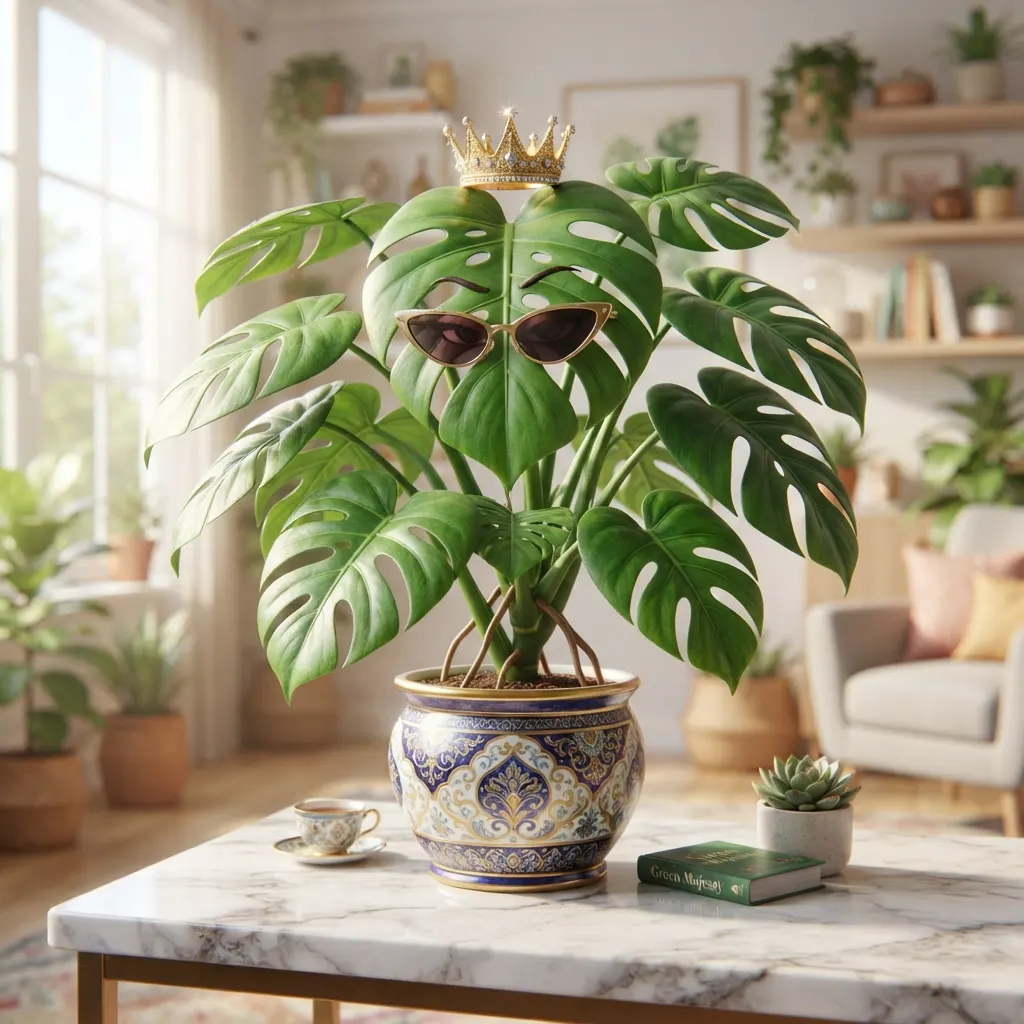
- King Monstera: A fitting title for an enormous split-leaf plant that takes over half of your living room space.
Managing High-Maintenance Plant Dramatics
When dealing with dramatic indoor plants, patience is your absolute best tool. Peace lilies are famous for completely collapsing on the floor when their soil dries out slightly, only to bounce back completely two hours after getting water. Acknowledging this drama with a funny title keeps your stress low while you grab the watering can.
Calatheas and ferns can also test your patience by crisping up their leaf edges over tiny temperature changes. Calling them by noble, dramatic names reminds you that their high standards are just part of their charming nature.
How to Choose the Perfect Fun Plant Name for Your Foliage
Finding the absolute best label for your green housemate does not have to feel overwhelming. You can look at physical traits, daily growing habits, or even your own personal hobbies for instant inspiration. The key is to let the plant’s unique look guide your choice naturally.
Take a few minutes to observe your new green addition before settling on a title. Watch how its leaves react to sunlight, notice the color patterns on its stems, and feel the texture of its foliage.
- Step 1: Observe Physical Traits (Leaves, Stems, Colors)
- Step 2: Note Dramatic Behaviors (Fast Growth, Quick Wilting)
- Step 3: Pick a Theme (Punny, Royal, Sweet, or Food-Based)
- Step 4: Assign Name & Test out the Vibe for a Week!
Looking at Physical Shapes and Patterns
Start by examining the shape of the leaves and the growth pattern of the stems. A plant with long, messy, wild vines practically begs for a chaotic name like “Tanglefoot” or “Medusa.” A perfectly symmetrical round succulent naturally fits neat, compact names like “Button” or “Marble.”
Color patterns offer another endless source of fun ideas. A variegated plant with splashy white markings can easily become “Freckles” or “Spot.” Red-edged leaves suggest fiery titles, while dark purple foliage fits spooky or dramatic names effortlessly.
Observing Daily Plant Behavior and Quirks
Every plant reacts to its environment in a slightly different way over time. Some turn their leaves toward the light like sunbathers, while others close their leaves completely when the sun goes down. Watching these daily movements gives you great clues about your plant’s personality.
- The Sun Chaser: For plants that lean aggressively toward windows, try names like “Tracker” or “Sunny.”
- The Drama Queen: For plants that drop instantly when dry, go with names like “Swoon” or “Melodrama.”
- The Slow Pokers: For cacti that do not change shape for months, pick titles like “Patience” or “Statue.”
- The Fast Crawlers: For vines that grow an inch a day, choose names like “Speedy” or “Runner.”
Fun Plant Names Ideas by Room Location
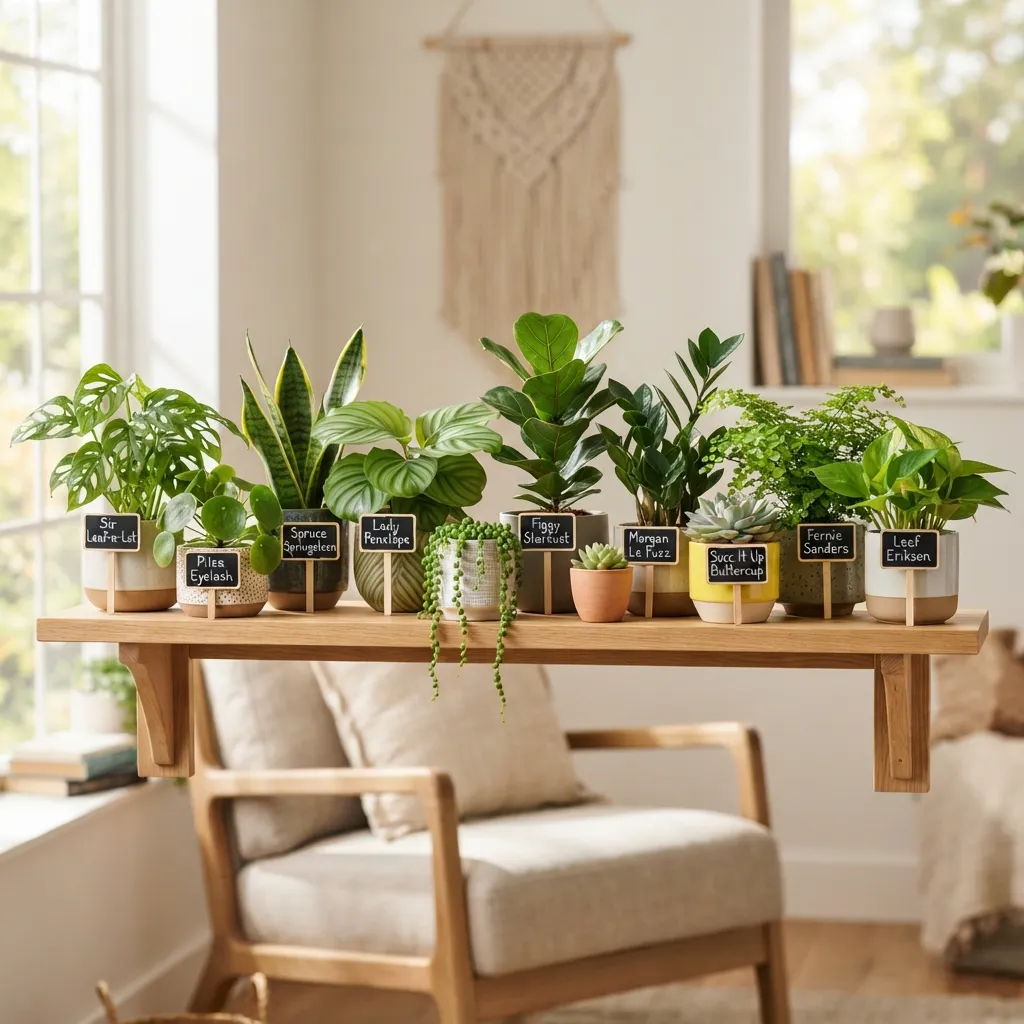
Matching your plant’s name to the room it lives in creates a hilarious theme across your home space. Your kitchen herbs can feature culinary humor, while your dark bathroom ferns carry soothing spa-like titles. Grouping your plant collection by location makes showing off your green space super entertaining for visitors.
Kitchen Counter Favorites
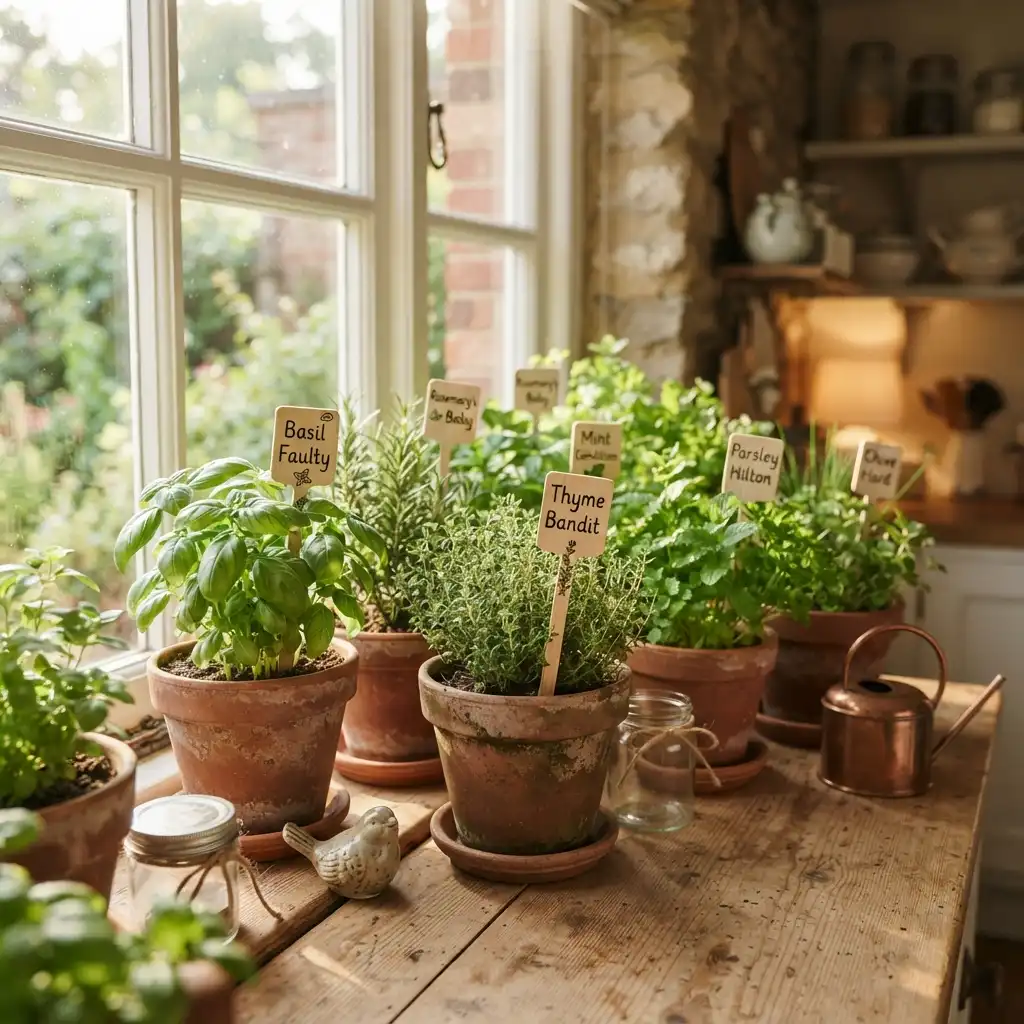
Kitchen plants are surrounded by food, cooking, and tasty smells all day long. Giving them culinary-themed titles adds extra charm to your cooking area while keeping your herbs happy on the windowsill.
- Basil Faulty: A chaotic, fast-growing basil plant that constantly spills leaves over your counter.
- Sage Against the Machine: A tough, flavorful sage plant that survives every recipe trimming easily.
- Thyme Bandit: A low-growing herb that slowly steals space from other pots on your sunlit ledge.
- Sir Mix-a-Lot: A mixed herb planter pot that features three different kitchen flavors in one place.
Relaxing Bedroom and Bathroom Greenery
Bathrooms and bedrooms are places for rest, steam, and quiet relaxation. Humidity-loving ferns in the shower deserve soothing, calm titles that reflect their cozy wet environments.
- Steam Demon: Perfect for a lush fern hanging right inside your steamy shower enclosure.
- Snoozy: A great title for a bedroom snake plant that purifies your night air while you sleep soundly.
- Drip Drop: A cute name for a tropical pothos enjoying the warm moisture of your bathroom vanity.
- Quiet Bob: A peaceful desktop succulent that sits quietly on your nightstand through the night.
MCQs
Test your knowledge on plant traits, botanical names, and care characteristics with this quick quiz!
1. Which plant is famous for its bright yellow flowers and fluffy seed heads?
A) Sunflower
B) Dandelion
C) Lavender
D) Tulip
2. Which plant gets its name because its leaves resemble the shape of a heart?
A) Heartleaf Philodendron
B) Snake Plant
C) Cactus
D) Fern
3. Which plant is commonly known for trapping and digesting insects?
A) Rose
B) Venus Flytrap
C) Daisy
D) Basil
4. Which plant has a name that sounds like it belongs to a magical creature?
A) Dragon Tree
B) Mint
C) Aloe Vera
D) Clover
5. Which plant is famous for its large, colorful blooms and is often associated with tropical places?
A) Hibiscus
B) Moss
C) Thyme
D) Ivy
6. Which plant is known for its long, pointed leaves and is often called a “Snake Plant”?
A) Sansevieria
B) Rosemary
C) Orchid
D) Marigold
7. Which plant is commonly associated with luck and usually has three or four leaves?
A) Clover
B) Bamboo
C) Daisy
D) Jasmine
8. Which plant name comes from its resemblance to a bird in flight?
A) Bird of Paradise
B) Spider Plant
C) Peace Lily
D) ZZ Plant
9. Which plant is famous for producing fragrant flowers and is often used in perfumes?
A) Jasmine
B) Cactus
C) Spinach
D) Bamboo
10. Which plant is known for its tall stem and large flower that often follows the direction of the sun?
A) Sunflower
B) Fern
C) Violet
D) Aloe Vera
Answers
- B) Dandelion
- A) Heartleaf Philodendron
- B) Venus Flytrap
- A) Dragon Tree
- A) Hibiscus
- A) Sansevieria
- A) Clover
- A) Bird of Paradise
- A) Jasmine
- A) Sunflower
FAQs
Why do plants have such weird scientific common names?
Botany records stretch back hundreds of years across many cultures. Early plant collectors named species based on their immediate physical visual appearance, local folklore, or odd growth habits. This created descriptive, hilarious common titles like Pig’s Ear or Donkey Tail that stuck around forever.
Can giving my plant a fun name help me care for it better?
Yes, naming your plant builds a clear mental connection that improves your daily care routines. You view the plant as a living companion with specific needs rather than simple shelf decor. This extra attention helps you spot dry soil or yellow leaves much faster.
What are some good fun plant names for beginners?
Great beginner options include easy wordplay like Spike, Lord Python, Cactus Jack, or Sir Leaf-a-Lot. Choosing simple, lighthearted titles keeps plant keeping fun and stress-free while you learn basic light and watering skills for your new green space.
Should I label my plant pots with their funny names?
Labeling your pots with small wooden stakes or cute clay tags is a fantastic idea. It makes your indoor garden look charming, helps housemates remember plant titles, and ensures everyone knows which specific plant needs watering on schedule.
How do I come up with punny plant names on my own?
Start by combining famous celebrity names, movie characters, or songs with plant words like leaf, fern, root, vine, or flora. Playing with rhyming sounds or swapping common words with green terms creates instant, hilarious plant puns easily.
Is it okay to change a plant’s name as it grows bigger?
Absolutely, changing a plant’s name is completely fine as its shape and size evolve over time. A tiny succulent named Peanut might eventually grow into a massive, sprawling monster that deserves a grand title like King Pebble instead.
Conclusion
Choosing fun plant names brings endless joy, lighthearted energy, and extra creativity into your daily houseplant routine. Whether you pick hilarious official common names, punny pop culture references, or adorable food-inspired nicknames, every label adds genuine personality to your green home space.
Giving your plants unique identities changes how you view your indoor garden forever. You will find yourself checking soil moisture more reliably, chatting with your leafy pals, and sharing your collection proudly with everyone who visits.
So grab your favorite potted fern or desktop succulent, take a close look at its unique traits, and pick out a title today. Give your green companion a fun plant name that makes you laugh, and enjoy watching your indoor jungle thrive!

Asjad Ali is a passionate, fun, and entertainment enthusiast who enjoys discovering interesting, amusing, and engaging content from around the web. Through laughvista.com, Asjad shares lighthearted ideas, entertaining stories, fun facts, jokes, and enjoyable content designed to bring a little more laughter and positivity into everyday life. His goal is to create content that feels natural, relatable, and easy for everyone to enjoy.
With a genuine interest in fun and entertainment, Asjad Ali focuses on creating friendly content for readers of different ages and backgrounds. laughvista.com is built around the idea that a few moments of laughter can brighten anyone’s day. Whether readers are looking for something funny, interesting, or simply entertaining, Asjad aims to make every visit enjoyable, refreshing, and worth coming back to.