

March is the third month of the modern calendar, packed with incredible trivia, historical shifts, and biological wonders. From the start of the Roman new year to peculiar astronomical events like the spring equinox, March offers a fascinating mix of history, science, and cultural celebrations.
March marks a dramatic bridge between the cold quiet of winter and the energetic burst of spring. If you are searching for surprising fun March facts to boost your trivia knowledge, you have arrived at the perfect place.
This dynamic month holds secrets ranging from ancient calendar shifts to quirky modern holidays. Exploring these fun March facts reveals just how much incredible history and science fits into thirty-one days.
Let us explore the unexpected stories, strange phenomena, and delightful trivia that make this period of the year truly unique.
The Epic Origin Story of March
Have you ever wondered why the third month feels like a grand fresh start for the planet? Ancient civilizations felt the same way, treating this time as the real beginning of their annual cycles.
How War and Agriculture Shaped the Name
The name comes directly from Martius, the ancient Roman month named after Mars, the god of war. Ancient Romans did not just celebrate combat during this period; they also focused heavily on agriculture.
As the winter ice melted, military campaigns resumed, and farmers returned to their fields. The dual nature of Mars as a defender of crops and a warrior made him the perfect symbol for this energetic seasonal shift.
When March Was Actually Month Number One
For centuries, the ancient Roman calendar consisted of only ten months, starting directly in March and ending in December. January and February did not even exist as official months on the early calendar.
Because the year started here, late winter was simply treated as an uncounted, monthless gap. It was not until calendar reforms shifted the new year to January that March became the third month we know today.
The Mystery of the Ides of March
You might have heard the famous literary warning to beware the Ides of March. In the ancient Roman calendar, the term Ides simply referred to the middle day of any month, usually falling on the fifteenth.
However, the date gained dark historical fame in 44 BCE when Julius Caesar was assassinated on that exact day. What started as a standard day for settling debts became one of history’s most famous political turning points.
Mind-Blowing Science and Astronomy Facts
The universe puts on quite a show during this month, offering celestial events that have fascinated humans for thousands of years.
The Spring Equinox and Equal Day and Night
Around March twenty-first, the sun crosses the celestial equator, creating the vernal equinox in the Northern Hemisphere. On this day, daytime and nighttime are nearly identical in length across the entire globe.
This astronomical shift marks the official arrival of spring, triggering biological changes in plants and animals everywhere. Earth is literally tilting back toward the sun, soaking up warm energy.
Strange Weather Patterns: In Like a Lion, Out Like a Lamb
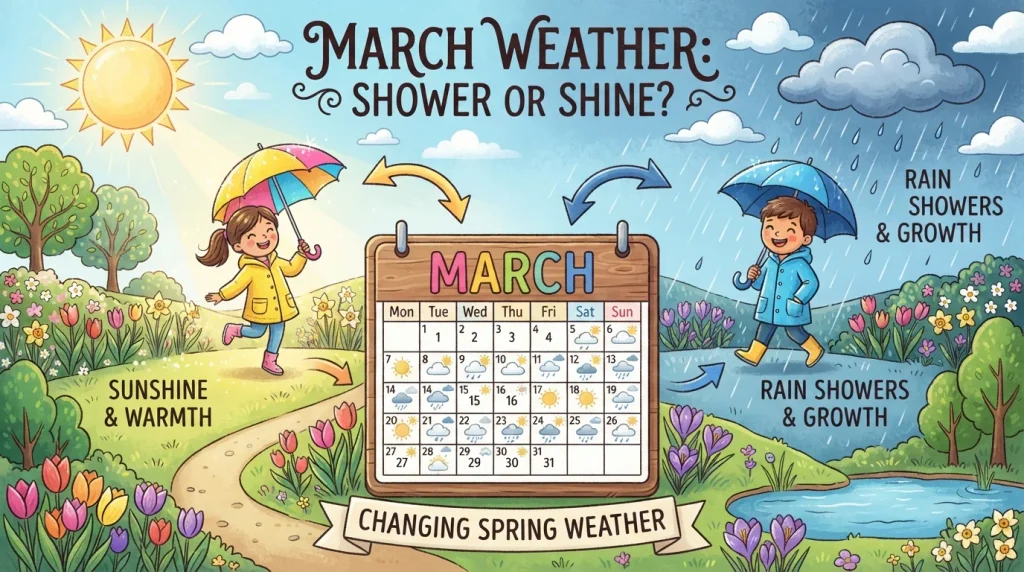
There is an old saying that March comes in like a lion and goes out like a lamb. This popular weather proverb describes the aggressive, stormy weather early in the month that softens into gentle spring breezes by the end.
Scientists note that this pattern happens because cold Arctic air collides with warming southern air masses. This intense temperature tug-of-war creates dramatic weather swings, high winds, and unexpected snowstorms.
The Full Worm Moon Explained
Native American traditions gave distinct names to every full moon throughout the year. The full moon appearing this month is traditionally called the Worm Moon.
As the ground thaws, earthworms begin emerging from the softening soil, inviting hungry birds back to the fields. It serves as a natural signal that the earth is waking up from its winter slumber.
Quirky Cultural Celebrations and Global Holidays

Beyond science, this thirty-one-day stretch hosts some of the liveliest and most unusual celebrations on the planet.
Pi Day: Celebrating Math and Pastries
Math enthusiasts and pie lovers unite every year on March fourteenth to celebrate Pi Day. The date mirrors the mathematical constant pi, which rounds to three point one four.
People mark the occasion by solving geometry puzzles, reciting endless digits of pi, and eating delicious baked pies. It turns a complex mathematical concept into an approachable, fun party.
St. Patrick’s Day and the Legend of the Shamrocks
March seventeenth marks St. Patrick’s Day, a global celebration of Irish culture, folklore, and heritage. Legend says St. Patrick used the three-leafed shamrock to explain complex spiritual ideas to the local people.
Today, rivers are dyed green, parades fill city streets, and people everywhere wear green to avoid playful pinches. It has evolved from a quiet religious reflection into a vibrant global festival.
International Women’s Day
March eighth is dedicated to honoring the cultural, political, and socioeconomic achievements of women worldwide. The tradition started in the early twentieth century during workers’ rights movements across North America and Europe.
It remains a vital day for advocacy, community action, and celebrating inspiring women who shape our world.
Incredible Historical Events That Happened in March
Throughout human history, this specific timeframe has been packed with groundbreaking inventions, artistic debuts, and major milestones.
The Birth of the Telephone
On March tenth, 1876, Alexander Graham Bell made the very first successful telephone call in history. He famously spoke into the device to his assistant, saying, Mr. Watson, come here, I want to see you.
That tiny experiment changed human communication forever, paving the way for the modern smartphones we use today.
The Monopoly Game Patent
In March 1935, Parker Brothers acquired the rights to Monopoly, turning it into a legendary board game. Created to teach economic concepts, it quickly became a favorite family pastime around the globe.
Millions of players have spent hours buying properties, building houses, and trying to dodge trip-to-jail cards.
The Launch of Twitter
On March twenty-first, 2006, co-founder Jack Dorsey sent the world’s very first tweet, which simply read, just setting up my twttr.
That single short message launched a social media platform that fundamentally reshaped digital news, pop culture, and global conversation.
Fascinating Nature and Animal Trivia
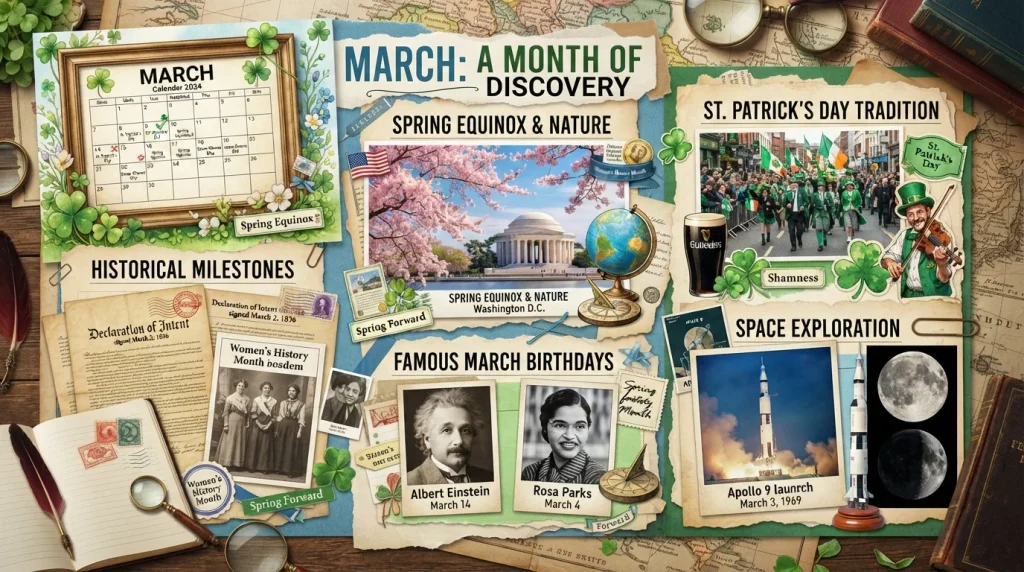
Nature undergoes a massive transformation during this period, bringing unique animal behaviors and biological surprises.
March Madness in the Animal Kingdom
You might associate the phrase March Madness with college basketball, but naturalists use it to describe animal behavior.
During this time, European hares engage in strange boxing matches in open fields. Female hares use their front paws to swat away overly eager male suitors, creating a chaotic natural spectacle.
Early Blooming Flowers That Defy the Cold
While snow may still cover the ground, resilient flowers like crocuses and snowdrops begin pushing through frozen soil.
These brave little blooms contain natural antifreeze proteins that protect their cell walls from freezing solid. They provide vital early nectar for queen bumblebees waking up from winter hibernation.
Great Bird Migrations Begin
Millions of birds begin their grueling journeys back north after spending winter in warmer southern climates.
Vast flocks of geese, cranes, and songbirds navigate thousands of miles using the magnetic field of the Earth and the position of the stars. It is one of the most remarkable endurance feats in the animal kingdom.
Unique Birthstones and Astrology Symbols
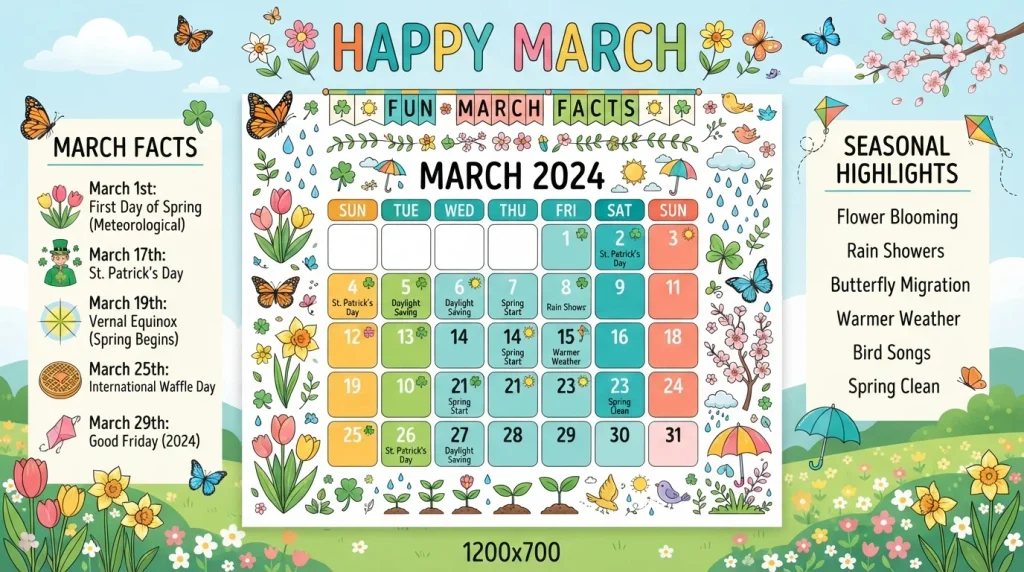
People born during this time share unique symbolic connections in astronomy, gemology, and floral lore.
The Meaning Behind Aquamarine and Bloodstone
The primary birthstone for this month is aquamarine, a stunning pale blue gem long associated with calm sea waters. Ancient sailors wore aquamarine amulets to protect themselves against ocean storms and bad luck.
The secondary birthstone is bloodstone, a deep green jasper speckled with bright red iron oxide spots, symbolizing strength and vitality.
The Vibrant Daffodil Flower
The official flower for this period is the bright yellow daffodil, representing rebirth and new beginnings.
Gifting a bouquet of daffodils is said to bring good fortune, happiness, and positivity to a home. They serve as nature’s ultimate announcement that sunny days have officially returned.
Pisces and Aries Star Signs
If your birthday falls early in the month, you belong to the astrological sign of Pisces, known for creativity, intuition, and empathy.
If you are born from March twenty-first onward, you are an Aries, a fire sign characterized by bold leadership, energy, and passion.
Practice Exercise
Test your newfound knowledge with these quick multiple-choice questions!
- How many days does March usually have?
A) 28
B) 29
C) 30
D) 31 - Which season begins in the Northern Hemisphere around March?
A) Spring
B) Summer
C) Autumn
D) Winter - What is the birthstone commonly associated with March?
A) Diamond
B) Aquamarine
C) Ruby
D) Emerald - Which flower is often associated with March?
A) Daffodil
B) Rose
C) Sunflower
D) Orchid - What zodiac signs are associated with March?
A) Pisces and Aries
B) Taurus and Gemini
C) Leo and Virgo
D) Libra and Scorpio - Which famous celebration takes place on March 17?
A) St. Patrick’s Day
B) Halloween
C) New Year’s Day
D) Valentine’s Day - What natural event can occur around March 20 in the Northern Hemisphere?
A) Spring equinox
B) Summer solstice
C) Winter solstice
D) Autumn equinox - Which color is strongly associated with St. Patrick’s Day?
A) Green
B) Purple
C) Orange
D) Pink - March is the third month of which calendar?
A) Gregorian calendar
B) Lunar calendar only
C) Mayan calendar only
D) Roman calendar only - What kind of weather is March often known for in many regions?
A) Changeable weather
B) Constant snow
C) Constant heat
D) No rainfall
Answer Key:
1-D | 2-A | 3-B | 4-A | 5-A | 6-A | 7-A | 8-A | 9-A | 10-A
FAQs
Why was March originally the first month of the year?
Ancient Roman society relied heavily on agriculture and military planning. Because winter paused both farming and warfare, the new year officially began when warm weather returned, and work could resume in the fields.
What is the meaning behind the phrase Ides of March?
The word Ides simply marked the middle of the month in the ancient calendar system. It became famous because Julius Caesar was assassinated on March 15, 44 BCE, making the date historically significant.
What causes the sudden weather changes during this month?
Rapid shifts occur because warm air masses from the equator move north while cold Arctic air pushes south. The violent collision of these opposing climate fronts causes unpredictable winds, rain, and sudden temperature drops.
Which zodiac signs belong to this specific time of year?
People born between February 19 and March 20 belong to the water sign Pisces. Those born between March 21 and April 19 fall under the adventurous fire sign Aries.
Why is the daffodil the official flower for this month?
Daffodils are among the very first perennial flowers to bloom as winter ends. Their bright yellow petals symbolize hope, renewal, and the joyful return of warmer spring weather.
How did Pi Day start?
Physicist Larry Shaw created Pi Day in 1988 at the San Francisco Exploratorium. He organized a fun celebration with staff and visitors featuring circular parades and sweet fruit pies.
Conclusion
Uncovering these fun March facts shows just how remarkable this transitional season really is. From ancient calendar shifts and astronomical milestones to quirky holidays and lively animal behaviors, there is never a dull moment.
Whether you are admiring early daffodil blooms or enjoying a slice of pie on Pi Day, take a moment to appreciate the dynamic energy around you. Sharing these fun March facts with friends is a great way to spread joy as spring arrives.
Which surprising piece of trivia impressed you the most? Keep exploring the rich history and science behind our calendar, and enjoy every single day of this exciting season!

Asjad Ali is a passionate, fun, and entertainment enthusiast who enjoys discovering interesting, amusing, and engaging content from around the web. Through laughvista.com, Asjad shares lighthearted ideas, entertaining stories, fun facts, jokes, and enjoyable content designed to bring a little more laughter and positivity into everyday life. His goal is to create content that feels natural, relatable, and easy for everyone to enjoy.
With a genuine interest in fun and entertainment, Asjad Ali focuses on creating friendly content for readers of different ages and backgrounds. laughvista.com is built around the idea that a few moments of laughter can brighten anyone’s day. Whether readers are looking for something funny, interesting, or simply entertaining, Asjad aims to make every visit enjoyable, refreshing, and worth coming back to.