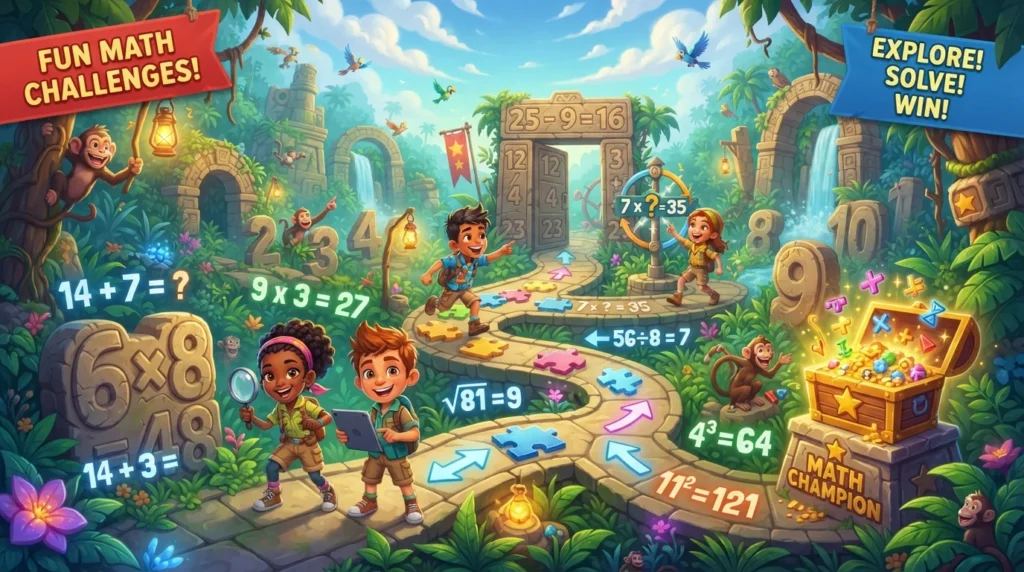
Fun math challenges are interactive puzzles, riddles, and logic games designed to build problem-solving skills through playful exploration. By transforming numbers into engaging visual patterns and brain teasers, these activities strengthen critical thinking, boost memory, and make mathematical learning enjoyable for kids and adults alike.
Remember when solving equations meant filling out boring, endless rows of white worksheets? Exploring fun math challenges completely flips that script by turning arithmetic into an exciting adventure full of mystery and discovery.
Instead of staring at dry formulas, engaging with fun math challenges allows you to train your brain while having genuine fun. These playful puzzles help kids build confidence and give adults a quick, rewarding daily brain workout.
Whether you want to challenge your family over weekend breakfasts or sharpen your own mental agility, numbers offer endless entertainment. Let’s look at how you can explore, solve, and create your own math puzzles today!
The Secrets Behind Why Our Brains Love Number Puzzles
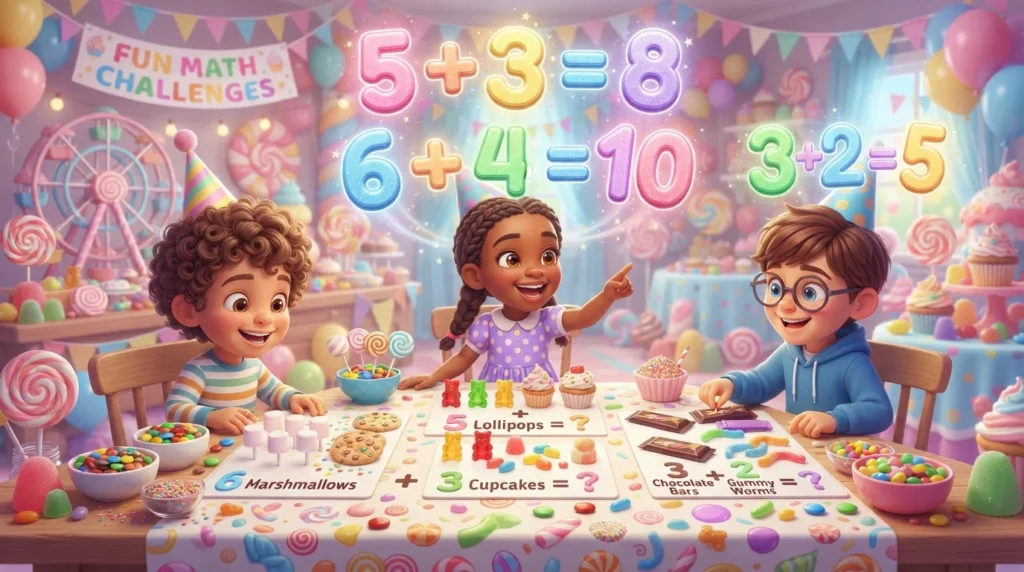
Solving a clever brain teaser triggers a natural surge of dopamine in your nervous system. That exhilarating feeling when a mysterious puzzle suddenly makes sense creates a healthy mental high that keeps you coming back for more.
Neuroscientists often note that working through visual number problems exercises both hemispheres of your cerebral cortex simultaneously. Your left hemisphere handles logical counting, while your right hemisphere analyzes spatial arrangements and visual patterns.
This dual brain workout strengthens neural pathways, improving memory recall and daily focus across all age groups. Playing with numbers turns abstract logic into a satisfying, tactile game.
The Dopamine Rush of Solving Tricky Riddles
When faced with a mysterious number riddle, your brain treats the missing variable as a hidden reward waiting to be uncovered. Working through logical steps builds subtle tension that breaks into instant joy the second you reach the correct answer.
This positive feedback loop builds genuine intrinsic motivation to learn complex subjects naturally. It replaces test anxiety with curious anticipation.
Building Resilience Through Playful Problem Solving
When a puzzle seems tough at first glance, your mind learns to test different hypotheses without fearing failure. Trying different operational paths teaches flexible thinking and emotional resilience during tricky tasks.
This healthy trial-and-error mindset carries over directly into real-world challenges outside of school or work. You start seeing complex problems as fun puzzles waiting to be solved.
Classic Categories of Mental Number Games
Mathematical puzzles come in a vast array of flavors suited for every skill level and interest. You can explore visual geometric paradoxes, clever word riddles, fast-paced mental math races, or logic grid mysteries.
Exploring different puzzle types keeps your daily brain workouts fresh and exciting. Here are the main categories that number lovers enjoy around the world.
Visual Logic and Pattern Puzzles
Visual pattern games replace traditional variable letters with colorful shapes, fruit icons, or geometric patterns. You deduce hidden values by observing how different symbols interact across stacked horizontal equations.
- Symbol equations where missing fruit icons represent hidden numbers.
- Grid patterns where missing numbers follow hidden multiplication or addition rules.
- Geometric shape counting games that test your spatial observation skills.
- Toothpick puzzles where moving a single stick corrects a broken mathematical statement.
Clever Word Riddles and Lateral Thinking Tasks
Word-based math riddles combine language skills with arithmetic logic to trick your initial assumptions. These questions often feature simple math hidden behind clever phrasing or unexpected double meanings.
For instance, consider a classic travel riddle: A bus departs with ten passengers, drops off three people, and picks up four more at the next stop. The real trick usually asks for the driver’s name or total stops rather than simple addition.
Fast Mental Calculation Challenges
Speed calculation games challenge you to calculate numbers rapidly in your head without relying on paper or calculators. Mastering mental tricks like doubling, halving, or rounding numbers makes large calculations surprisingly easy.
These quick games build numerical fluency and mental speed for real-life shopping trips or quick budget estimations. Practicing for five minutes every morning sharpens mental focus instantly.
Step-by-Step Guide to Solving Visual Equation Puzzles
Visual equation puzzles flood social media feeds because they look simple until subtle details trip people up. A pair of sneakers might count as ten in one line, but a single sneaker only counts as five in the final line.
Following a clean, systematic approach prevents silly mistakes and helps you solve every puzzle correctly on your first try. Here is how you can break down visual equations like an expert detective.
Step 1: Isolate the First Row with Identical Symbols
Start by examining the top line, which usually features three identical items added together to equal a clean target number. Divide the final sum by three to determine the exact base value of one individual item.
For example, if three matching apples equal thirty, then one single apple must equal ten. Write this base value clearly on your scratch paper to track it.
Step 2: Substitute Known Values into Subsequent Rows
Move down to the second line and replace the known items with the number value you discovered in the previous step. Subtract that known quantity from the total line sum to isolate the remaining unknown symbols.
Divide the remaining sum by the number of new items present in that line to find their exact individual value. Repeat this substitution step carefully for every line down the page.
Step 3: Inspect the Final Line for Sneaky Visual Tricks
The final line almost always hides clever visual changes designed to test your attention to detail. Look closely at small background details, such as items holding extra accessories, stacked pairs, or missing parts.
Pay close attention to operational signs as well, as the final line frequently switches from simple addition to multiplication. A pair of shoes equals ten, but a single shoe equals five!
Step 4: Follow Standard Operational Order to Get the Result
Always execute multiplication and division operations before performing final addition or subtraction steps. Skipping correct operational order leads directly to incorrect final calculations, even if your item values are accurate.
Multiply the final items together first, then add any remaining base values to claim your correct answer. Double-check your basic addition one last time before declaring victory.
Comparing Brain Puzzle Formats
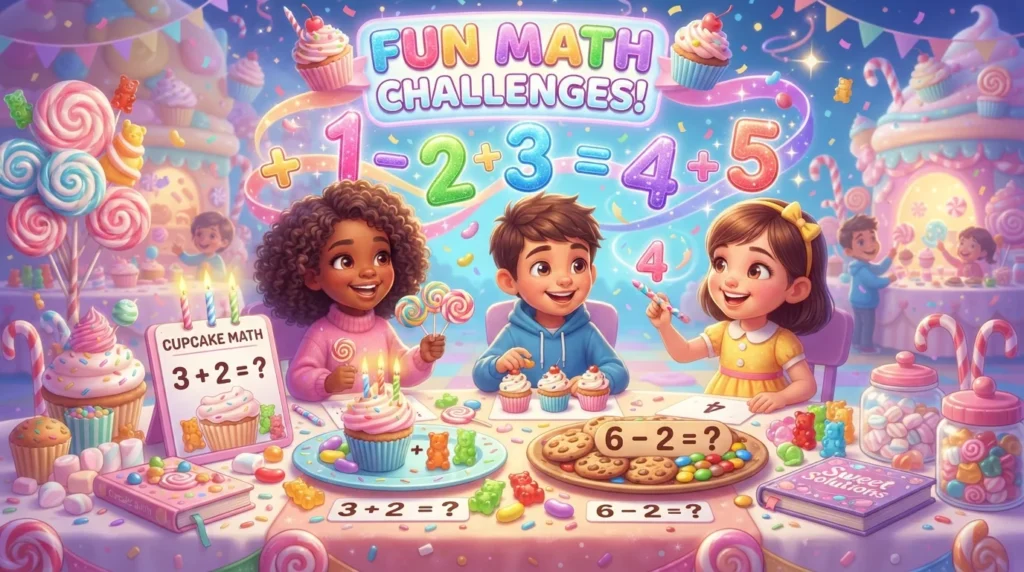
Choosing the right brain puzzle format depends on your available time, learning goals, and preferred cognitive style. Different formats target distinct mental skills—some build rapid spatial logic and pattern recognition, while others sharpen long-term memory, working recall, or lateral thinking. Evaluating these core puzzle structures side by side allows you to select the ideal mental workout whether you have two minutes for a quick coffee break or an hour of uninterrupted leisure time.
Visual Symbol Equations and Pattern Puzzles
Visual symbol puzzles replace traditional variable letters with colorful icons, geometric shapes, or themed illustrations across stacked horizontal equations. They engage your brain’s right hemisphere by requiring quick spatial observation and keen visual detection alongside standard arithmetic. These short, eye-catching challenges are ideal for rapid mental warm-ups, quick social media brain breaks, or introducing young learners to early algebraic thinking without formal notation.
Gridded Logic Games and Deduction Matrixes
Gridded challenges—such as classic Sudoku, Kakuro, or logic elimination matrices—rely on systematic reasoning, rule adherence, and careful elimination. Instead of requiring fast mental calculation, these puzzles ask you to analyze spatial relationships, cross-reference row and column constraints, and plan multiple steps ahead. They provide a calm, deeply absorbing mental exercise that builds sustained focus, short-term working memory, and disciplined analytical thinking.
Word-Based Riddles and Lateral Thinking Tasks
Word-based math riddles merge linguistic comprehension with numerical logic to challenge your initial assumptions. These puzzles frequently hide straightforward arithmetic behind clever phrasing, double meanings, or unexpected context switches that force you to think outside the box. They work exceptionally well for interactive group settings, family dinners, and road trips because they encourage open conversation, creative hypotheses, and collaborative problem-solving.
Fascinating Tricks to Master Speed Mental Arithmetic
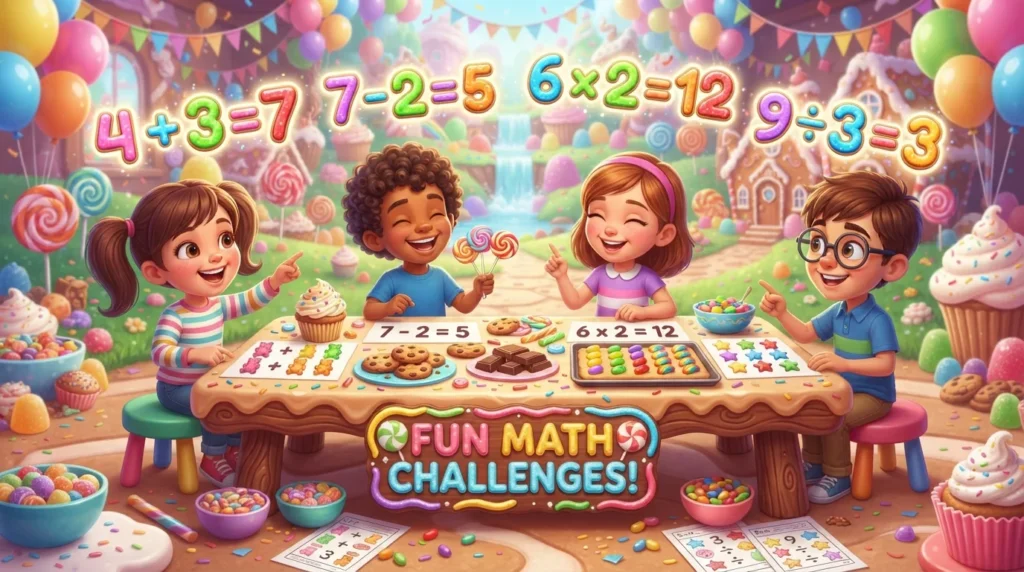
Mental math feels like magic to onlookers, but it relies on simple structural shortcuts that anyone can master with brief practice. Learning these mental shortcuts eliminates your reliance on smartphone calculators for everyday tasks.
Using number breakdown techniques makes mental math effortless during daily shopping or dining out with friends. Here are three fantastic shortcuts you can start using today.
The Nine Multiplication Hand Trick
You can calculate any single-digit multiplication fact for the number nine using your ten fingers in seconds. Spread both hands flat in front of you with palms facing toward your chest.
To calculate nine times four, simply fold down your fourth finger from the left (your left index finger). Count the fingers to the left of the folded finger (three) and the fingers to the right (six) to get thirty-six!
Quick Percentage Calculations in Your Head
Calculating percentages like fifteen percent for restaurant tipping feels simple when broken into two easy parts. First, find ten percent of the total bill by moving the decimal point one place to the left.
Next, divide that ten percent value in half to find five percent, and add those two numbers together. For a forty-dollar meal, ten percent is four dollars, five percent is two dollars, making a fifteen percent tip six dollars!
Multiplying Double-Digit Numbers by Eleven Easily
To multiply any two-digit number by eleven, add the two digits together and place the result in the middle. If you want to multiply thirty-five by eleven, add three and five together to get eight.
Place eight between three and five to reveal the answer: three hundred eighty-five! If the inner sum exceeds nine, simply carry the one over to the left number.
How to Create Engaging Number Games for Kids
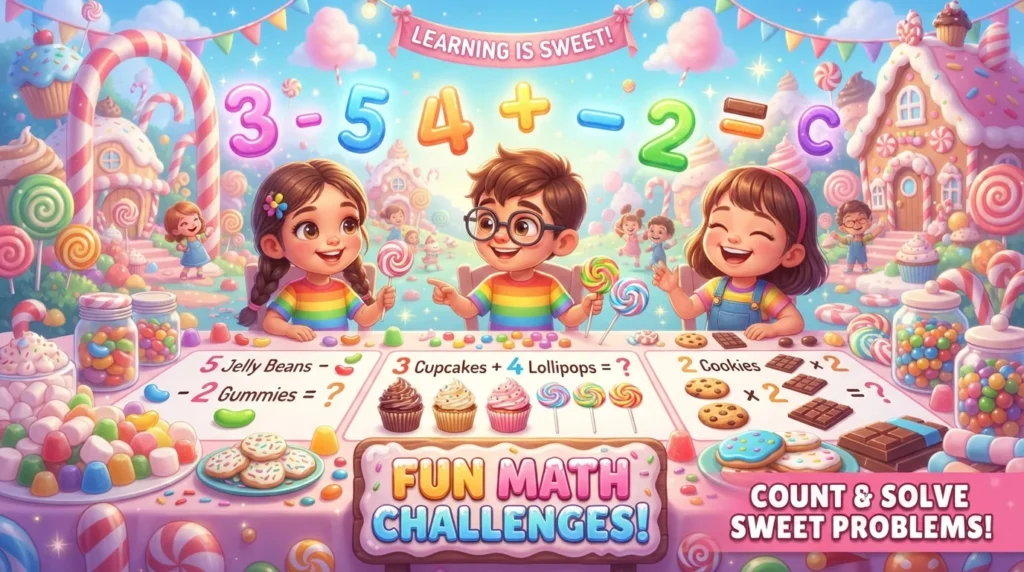
Teaching children to love numbers works best when you weave mathematical concepts into physical play and storytelling. Removing strict grading pressure lets children explore numerical concepts with natural curiosity.
Creating a supportive environment where wrong answers are viewed as interesting steps builds long-term confidence. Here are practical ways to design fun learning activities at home.
Using Everyday Household Objects as Physical Counters
Replace abstract written numbers on paper with tangible items like colorful buttons, dried pasta pieces, or Lego bricks. Physical objects let young learners touch, group, and rearrange quantities visually to understand addition and division intuitively.
Baking cookies offers a brilliant opportunity to practice fractions, measurement conversions, and proportional scaling hands-on. Children absorb foundational concepts naturally while enjoying a delicious kitchen activity.
Turning Story Time into Interactive Quests
Weave numerical clues directly into bedtime stories or adventure games around your home. Create a mini treasure hunt where solving simple addition clues reveals hidden map locations or secret box combinations.
Frame math problems as helping a friendly dragon count gold coins or dividing dragon berries equally among woodland friends. Relatable storytelling transforms abstract calculations into meaningful adventure goals.
MCQs
Test your logical reasoning, attention to detail, and operational order skills with these ten multiple-choice questions!
- If three identical red apples equal thirty, and one apple plus two bananas equal eighteen, what is the value of one banana?
A. 2
B. 4
C. 6
D. 8 - What basic operational rule must you always follow when solving equations with mixed operations?
A. Always calculate left to right regardless of signs
B. Perform addition before any multiplication
C. Execute multiplication and division before addition and subtraction
D. Always solve subtraction steps first - How do visual pattern puzzles help train both hemispheres of the human brain?
A. By forcing you to memorize long lists of vocabulary words
B. By combining spatial visual observation with sequential numerical calculation
C. By requiring you to draw complex landscapes on paper
D. By eliminating all logical rules entirely - Using the double-digit multiplication trick for eleven, what is forty-two multiplied by eleven?
A. 420
B. 462
C. 482
D. 522 - What easy step finds ten percent of any whole number quickly?
A. Multiply the number by ten
B. Move the decimal point one position to the left
C. Divide the number by two
D. Add one hundred to the total - What is the value of a single shoe if a pair of identical running shoes equals twelve?
A. 3
B. 6
C. 12
D. 24
Answer Key
- B
- C
- B
- B
- B
- B
FAQs
How can I make math fun for a child who hates worksheets?
Replace traditional paper worksheets with interactive board games, visual symbol riddles, and real-life kitchen measurement tasks. Connecting numbers to physical toys, cooking, and adventure stories removes learning anxiety and builds natural curiosity.
Are daily logic puzzles helpful for maintaining adult brain health?
Yes, solving daily number puzzles actively strengthens neural connections and improves processing speed as you age. Regular mental workouts exercise memory recall, spatial awareness, and deductive reasoning skills effectively over time.
What is the most common mistake people make with viral math puzzles?
The most frequent mistake is ignoring proper operational order or overlooking small visual changes in the final row. Always check for single items instead of pairs and remember to multiply before adding.
How do visual symbol equations build algebraic thinking early?
Visual symbol equations teach children the fundamental concept of variables without overwhelming them with formal algebraic letters. Replacing unknown numbers with pictures of fruit or animals builds functional equation-solving skills intuitively.
Can mental arithmetic tricks improve overall math confidence?
Yes, mastering quick mental math tricks gives learners a sense of accomplishment and reduces reliance on calculators. Knowing simple shortcuts makes everyday estimations fast, easy, and satisfying in real-world scenarios.
Where can I find new daily logic challenges for free?
You can find endless free logic puzzles on educational websites, mobile puzzle applications, and dedicated math community forums. Local libraries also stock fantastic collections of lateral thinking riddle books and Sudoku volumes.
Conclusion
Engaging with fun math challenges is a wonderful way to boost brain power, build resilience, and rediscover the joy of learning. Whether you are solving visual symbol equations, mastering mental arithmetic shortcuts, or sharing word riddles with family, numbers offer endless creative entertainment.
By approaching puzzles with curiosity and following clear operational steps, complex problems become satisfying mental victories. Incorporating simple logic games into your daily routine keeps your mind sharp, flexible, and ready for any real-world challenge.
Pick a exciting puzzle, share it with a friend, and start enjoying the wonderful world of numbers today!

Asjad Ali is a passionate, fun, and entertainment enthusiast who enjoys discovering interesting, amusing, and engaging content from around the web. Through laughvista.com, Asjad shares lighthearted ideas, entertaining stories, fun facts, jokes, and enjoyable content designed to bring a little more laughter and positivity into everyday life. His goal is to create content that feels natural, relatable, and easy for everyone to enjoy.
With a genuine interest in fun and entertainment, Asjad Ali focuses on creating friendly content for readers of different ages and backgrounds. laughvista.com is built around the idea that a few moments of laughter can brighten anyone’s day. Whether readers are looking for something funny, interesting, or simply entertaining, Asjad aims to make every visit enjoyable, refreshing, and worth coming back to.