
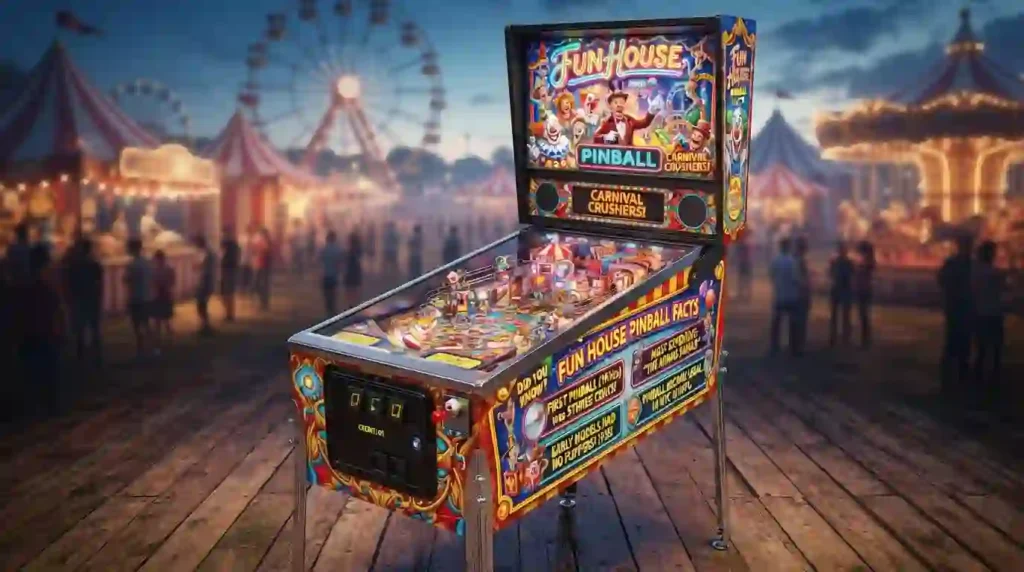
Fun House pinball is an iconic 1990 Williams pinball machine designed by Pat Lawlor. It features Rudy, an interactive animatronic talking head that reacts to your gameplay. To score high, players must advance the clock to midnight, put Rudy to sleep, and shoot the ball into his open mouth to start Multiball.
Have you ever had an arcade game insult your outfit while you were trying to play? If you have spent any time around classic arcade games, you probably know the funhouse pinball machine and its famous, fast-talking head named Rudy.
This 1990 Williams masterpiece changed pinball history by blending solid physical shots with an annoying personality you cannot help but love. Whether you want to beat your local high score or finally ruin Rudy’s afternoon, this guide breaks down everything you need to know about the fun house pinball experience.
Understanding the Magic of Fun House Pinball
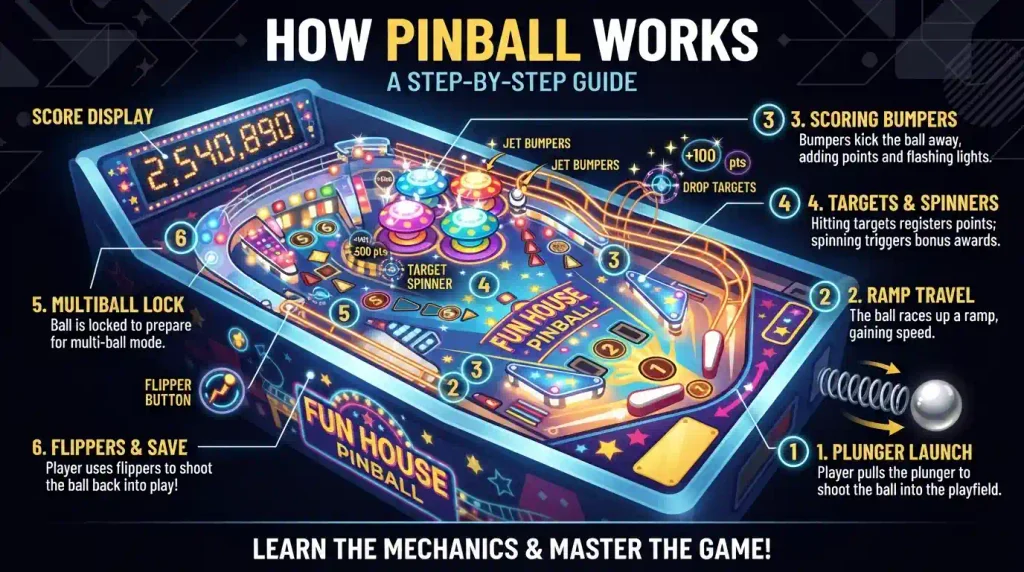
The fun house pinball machine hit arcades back in 1990, during what many players call the golden era of pinball design. Created by legendary designer Pat Lawlor, this game introduced groundbreaking mechanical features that blew players away. Instead of just chasing light-up targets, players found themselves interacting with an actual character sitting right on the playfield.
Rudy is not just a plastic decoration sitting in the upper right corner. His eyes follow your ball across the board, his jaw opens and closes, and he reacts instantly to your hits and misses. If you miss an easy shot, he will mock you, but if you hit the right loop, you get to hit him right in the face.
The Story Behind the Design
Pat Lawlor wanted to create an amusement park experience compressed inside a wooden cabinet. He had just finished working on Earthshaker, but he wanted his next project to feel more personal and interactive. He teamed up with programmer Dwight Sullivan and artist John Youssi to build a living world inside the game.
They used custom motors and cables to make Rudy speak and move his eyes in real time. Back in 1990, this level of mechanical detail was unheard of in arcades. It turned a regular game of chance into a direct battle between the player and a wooden dummy.
Why Rudy Changed Arcades Forever
Before this table arrived, pinball machines relied mostly on sound effects and flashing lights to communicate. Rudy gave the game a voice, an attitude, and a clear personality that mocked players whenever they made mistakes. Players spent pockets full of quarters just to shut him up by launching a steel ball into his mouth.
This interactive personality set the stage for future hit machines like The Addams Family and Twilight Zone. It proved that pinball games could tell stories and feature real characters rather than just basic point targets.
Key Physical Features of the Cabinet
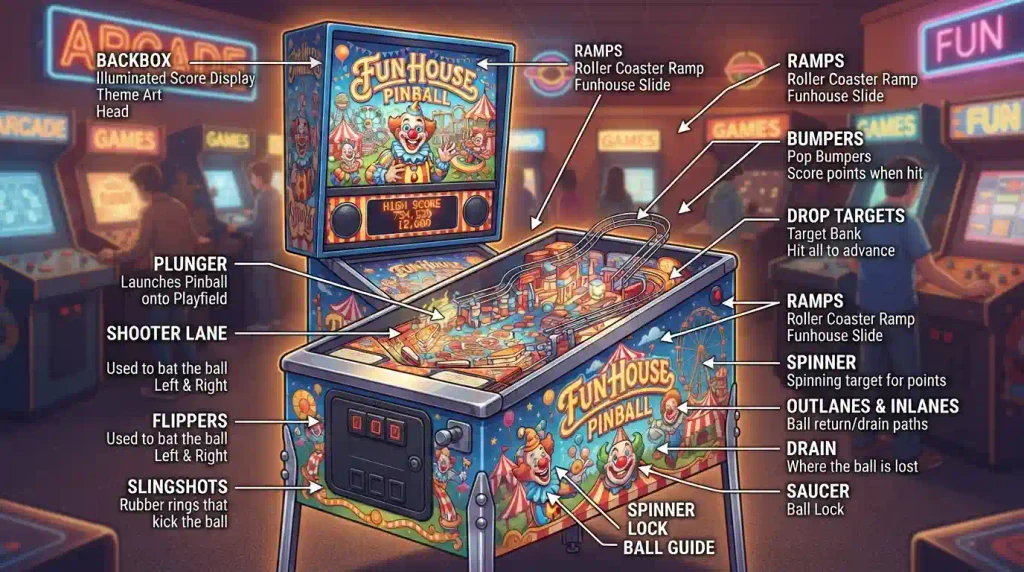
The layout of the board is packed with unique shots that require quick timing and sharp control. Understanding where everything sits on the playfield is your first step toward mastering the game.
- Rudy’s Head: Sitting top right, his mouth acts as a key shot target during special game modes.
- The Clock: Located in the center, this giant lighted dial tracks your progress toward midnight.
- The Steps Ramp: A tricky side ramp shot that awards mystery bonuses, extra balls, and quick points.
- The Superdog Ramp: A smooth center ramp that feeds ball control back to your flippers.
- Hidden Plunger Upper Loop: A secondary mini-plunger on the left side used for skill shots and precision awards.
Complete Breakdown of Fun House Rules and Objectives
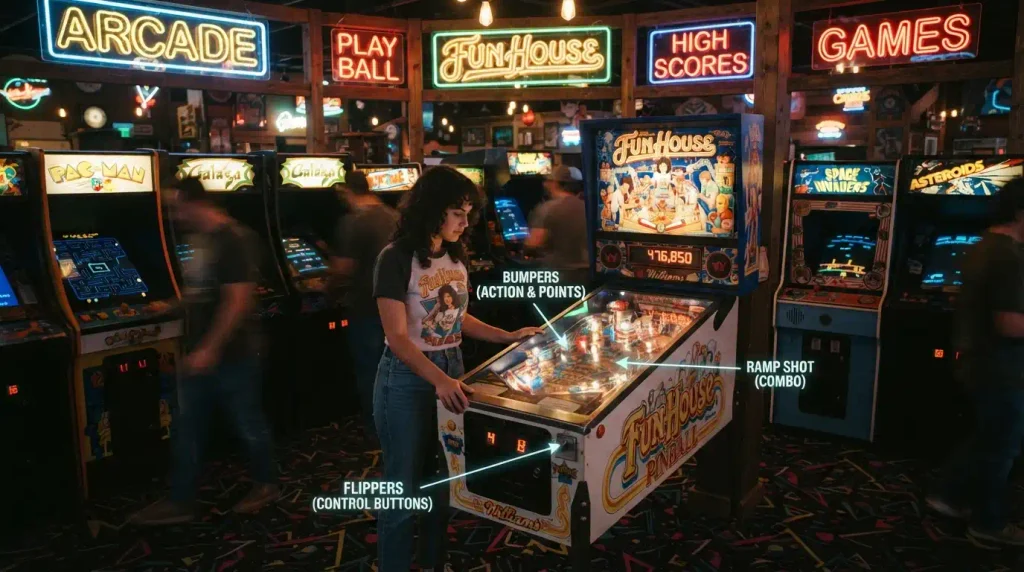
To score big on this game, you need a clear strategy rather than just random flipper slaps. The main goal of the game is simple: advance the clock hands all the way to 12:00 Midnight, put Rudy to sleep, and shoot a ball down his throat.
Advancing the Main Clock
The clock face in the middle of the board dictates your main game progression. Every time you start a game, the clock starts at 8:00 AM, and your job is to drive it forward to midnight.
You advance the clock by hitting specific targets like the side loops, ramps, and lit standup targets. Certain shots advance the clock by 15 minutes, while major loop shots can skip the time forward by a whole hour. Paying attention to which targets are lit for clock advances will save you time and keep you on track.
Reaching Midnight Mode
When you successfully tick the clock forward to 11:45 PM, the game audio gets quiet and tense. Hitting one more clock target turns the dial to 12:00 Midnight, causing Rudy to fall fast asleep.
Once Rudy is snoring, his mouth stays wide open, and his eyes close tight. This is your cue to strike quickly before he wakes up. Shooting the ball straight into his open mouth starts the primary Multiball feature, which unlocks massive point-scoring opportunities.
Scoring Millions with Multiball
Starting Multiball dumps extra balls onto the playfield, causing immediate chaos. While two or three balls are flying around, your main focus should be hitting the Superdog ramp and shooting Rudy again for Jackpot awards.
- Lock your first ball inside the Mirror lane when lit.
- Advance time to 12:00 Midnight to make Rudy fall asleep.
- Shoot a second ball directly into Rudy’s open mouth to start Multiball.
- Hit the main center ramp repeatedly to claim your Million-point Jackpots.
Advanced Shot Strategies and Ball Control
Hitting shots consistently on this machine requires clean technique because the playfield layout can be unforgiving. A missed shot often bounces straight off Rudy’s chin and drops down the center drain.
Quick Playfield Scoring Reference
- Rudy’s Open Mouth: Your highest priority target. Shooting here starts Multiball for major scoring.
- Center Superdog Ramp: Offers 250k+ points and loops while safely returning the ball to your flippers.
- The Steps Ramp: A high-risk, high-reward shot that yields mystery bonuses.
- Trap Door Target: Perfect for quick points and building up combo chains.
- Left Clock Loop: Vital for driving progress on the clock face.
Mastering the Steps Ramp Shot
The Steps ramp on the right side is one of the most technical shots on the board. You usually feed the ball to this ramp using the secondary plunger on the upper left side of the table.
Timing this shot perfectly allows you to choose your reward as the ball rolls down the steps board. You can land on Superdog points, light an Extra Ball, or collect a 500,000-point bonus. Practicing your plunger strength helps you land on the Extra Ball option consistently.
The Trap Door Extra Ball Secret
Hidden right near the center loop is the Trap Door target. While it seems like a hard target to hit on purpose, lighting the Trap Door gives you massive bonus scoring options.
You light the Trap Door by completing the “G-A-N-G-W-A-Y” targets along the lower sides. Once lit, a quick backhand shot with the right flipper can open the door and drop the ball inside for a surprise award.
Safe Returns and Flipping Timing
Because the center lane bounces unpredictably, you should always try to pass the ball safely across your flippers. Avoid flailing at balls coming down the side lanes fast.
- Cradle the ball: Hold the flipper up to trap the ball against the inlane plastic when possible.
- Pass control: Use gentle nudges when the ball hits the top sling arc to keep it away from outlanes.
- Backhand shots: You can easily hit the left clock loop using a solid backhand from the left flipper.
Maintenance and Technical Restoration Tips
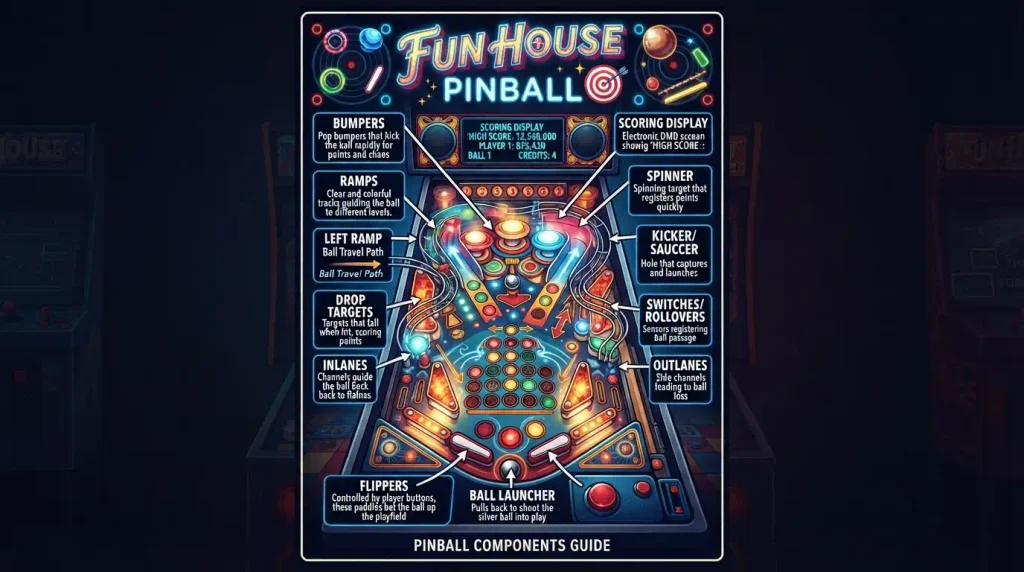
If you are lucky enough to own or service a fun house pinball machine, keeping it running smoothly takes regular upkeep. Animatronic parts wear out over time, especially when steel balls are flying at them at high speeds.
Essential Component Maintenance
- Rudy’s Jaw Cable: This component frequently snaps or stretches out over time. The best fix is replacing it with a stainless steel cable kit.
- Eye Mechanism Gears: These often jam or skip alignment. Clean away old grease and use dry Teflon lube to keep them moving smoothly.
- Main Clock Decal: The dial decal can peel off or fade with age. Applying a clear plastic overlay guard will keep it protected.
- Steps Ramp Plastic: This section tends to crack near the ball drop zone. Install clear washer protectors to prevent damage.
Keeping Rudy Working Smoothly
Rudy uses a complex set of small cranks, linkages, and solenoids inside his head to move his eyes and jaw. If his mouth stops opening, check the lower pull-cable underneath the playfield first.
Never use heavy petroleum grease inside Rudy’s eye mechanisms. Heavy grease collects dust, wood shavings, and metal bits from the board, which will jam his plastic gears. Always clean the gears with isopropyl alcohol and use light dry lube instead.
Upgrading to Modern LED Lighting
Many arcade owners switch the original incandescent bulbs out for modern frosted LEDs. LEDs reduce heat underneath the plastic ramps, preventing old custom plastics from warping or cracking.
Make sure you use warm-white bulbs for general illumination so the original artwork colors stay vibrant. Using cold blue or bright white lights can make John Youssi’s warm carnival artwork look washed out and harsh.
Modern Re-releases and Software Updates
If you love this table, you should know that modern pinball companies have created upgrade kits for original machines. These kits replace the original sound chips and display screens with modern color displays and upgraded high-definition audio options.
These updates add new game modes, extra sound clips, and secondary scoring paths while keeping the original board hardware intact. It gives older tables a fresh feel without ruining their classic arcade history.
MCQs
Test your knowledge about the rules, history, and strategies of this classic pinball machine!
1. What is a pinball machine?
A) An arcade game
B) A kitchen appliance
C) A musical instrument
D) A camera
2. What does a player use to control the ball in pinball?
A) Flippers
B) Joystick only
C) Steering wheel
D) Keyboard
3. What happens when a pinball hits certain targets?
A) The player can earn points
B) The machine turns off
C) The ball disappears permanently
D) The screen changes channels
4. What is the main goal of pinball?
A) Score as many points as possible
B) Finish a race
C) Solve a crossword
D) Build a structure
5. What helps keep the pinball inside the machine?
A) Playing field walls
B) Curtains
C) Windows
D) Bookshelves
6. Which feature can be found on themed pinball machines?
A) Lights and sound effects
B) Cooking burners
C) Garden tools
D) Office printers
7. What is a bumper in pinball?
A) A game element that can bounce the ball
B) A type of ticket
C) A player’s shoe
D) A machine cover
8. Where are pinball machines commonly found?
A) Arcades and entertainment venues
B) Libraries
C) Hospitals
D) Grocery freezers
9. Why do themed pinball machines attract players?
A) They combine gameplay with visual and sound themes
B) They provide food automatically
C) They teach driving
D) They replace televisions
10. What can make a “Fun House” themed pinball machine exciting?
A) Carnival-style lights, sounds, and playful targets
B) Plain walls
C) No interactive elements
D) A blank playing field
Answer Key
1-A | 2-A | 3-A | 4-A | 5-A | 6-A | 7-A | 8-A | 9-A | 10-A
FAQs
What makes the Fun House pinball machine so famous?
It was one of the first pinball games to feature an interactive animatronic character that reacted directly to gameplay. Rudy’s hilarious commentary, moving eyes, and unique talking mouth mechanism completely changed how arcade machines engaged with players.
How do I get a high score on Fun House?
Focus on advancing the clock to midnight as quickly as possible to trigger Multiball. Once Multiball starts, repeatedly hit the main Superdog ramp to collect massive Jackpot points while keeping multiple balls in active play.
Does a real actor voice Rudy?
Yes, Rudy was voiced by Ed Boon, who is famous for co-creating the Mortal Kombat video game franchise. He provided both the vocal clips and Rudy’s legendary sarcastic personality.
Can I play Fun House on modern digital consoles?
Yes, digital versions of the table have been officially licensed and recreated for modern pinball platforms. You can play digital recreations on modern gaming consoles, computers, and mobile devices through virtual arcade software.
How much does an original machine cost today?
Depending on its physical condition and functional state, an original machine usually sells between $6,000 and $10,000. Fully restored machines with modern LED lighting upgrades and custom cabinet art often sell for even higher prices.
Conclusion
The fun house pinball machine remains one of the absolute best achievements in arcade history. Its mix of brilliant ramp design, clever code rules, and a sarcastic animatronic villain gives it a unique charm that still holds up today.
Once you learn how to control your flipper shots and manage the clock, scoring millions of points gets easier. Keep practicing your ramp precision, lock those balls in order, and send Rudy off to sleep. Head over to your nearest arcade bar, drop in a coin, and show that dummy who is really in charge!

Asjad Ali is a passionate, fun, and entertainment enthusiast who enjoys discovering interesting, amusing, and engaging content from around the web. Through laughvista.com, Asjad shares lighthearted ideas, entertaining stories, fun facts, jokes, and enjoyable content designed to bring a little more laughter and positivity into everyday life. His goal is to create content that feels natural, relatable, and easy for everyone to enjoy.
With a genuine interest in fun and entertainment, Asjad Ali focuses on creating friendly content for readers of different ages and backgrounds. laughvista.com is built around the idea that a few moments of laughter can brighten anyone’s day. Whether readers are looking for something funny, interesting, or simply entertaining, Asjad aims to make every visit enjoyable, refreshing, and worth coming back to.