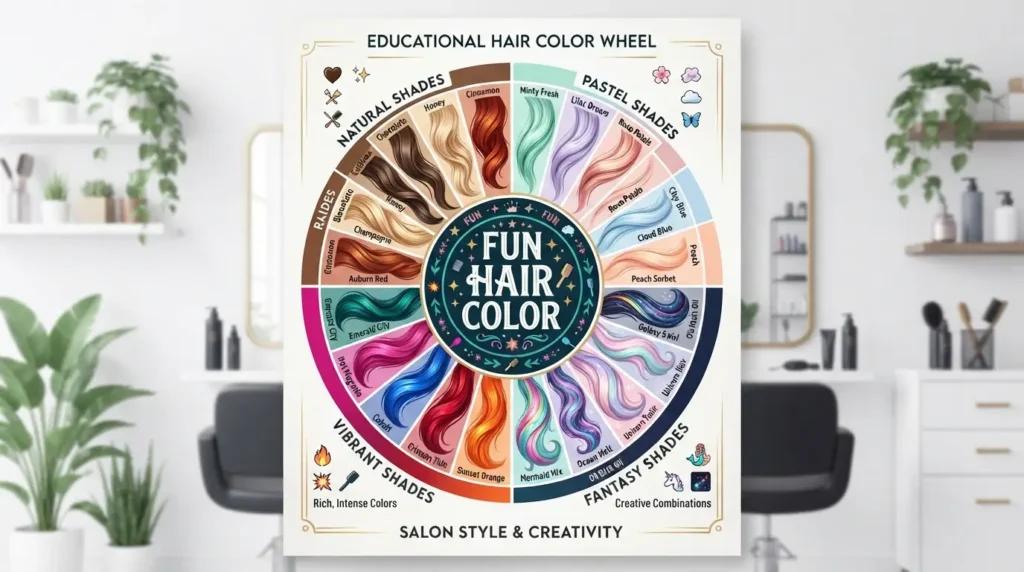
Choosing a fun hair color allows you to express your personality through bright shades like pastel pink, vibrant blue, or emerald green. Successful dyeing requires selecting the right formula (temporary, semi-permanent, or permanent), understanding lightener basics, preparing your strand base properly, and using sulfate-free color care products to maintain shade longevity.
Have you ever stared in the bathroom mirror and felt the sudden urge to transform your locks into a neon rainbow? Stepping into the world of fun hair color is one of the most exciting ways to refresh your personal style.
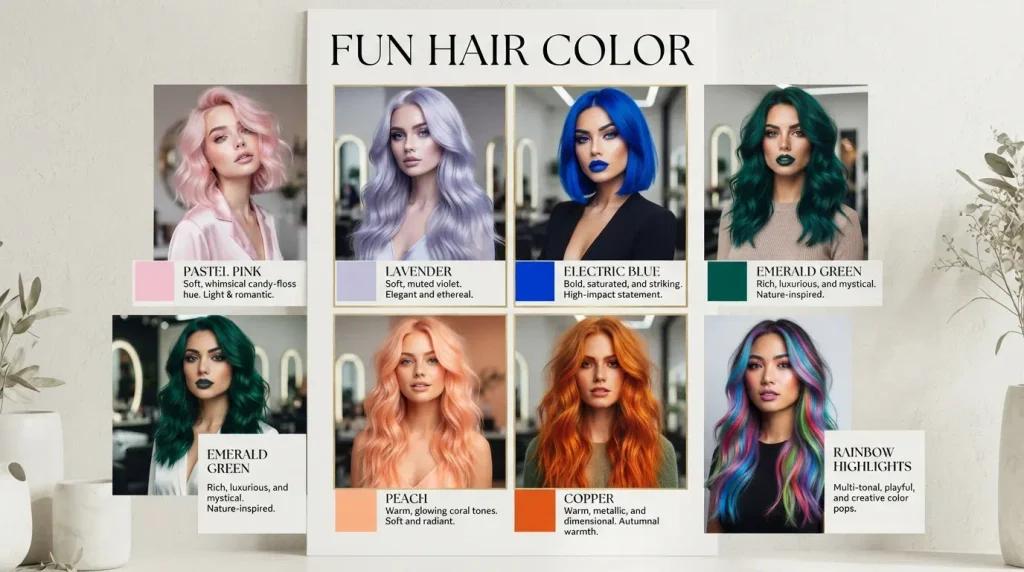
Choosing a bold, fun hair color lets you play with personality, test creative trends, and turn everyday styling into artistic expression. From subtle pastel highlights to vivid gemstone tones, there is a shade out there for everyone.
Let us walk through everything you need to know about choosing, applying, and protecting your new fun hair color!
Why Vivid and Pastel Hair Shades Are Taking Over
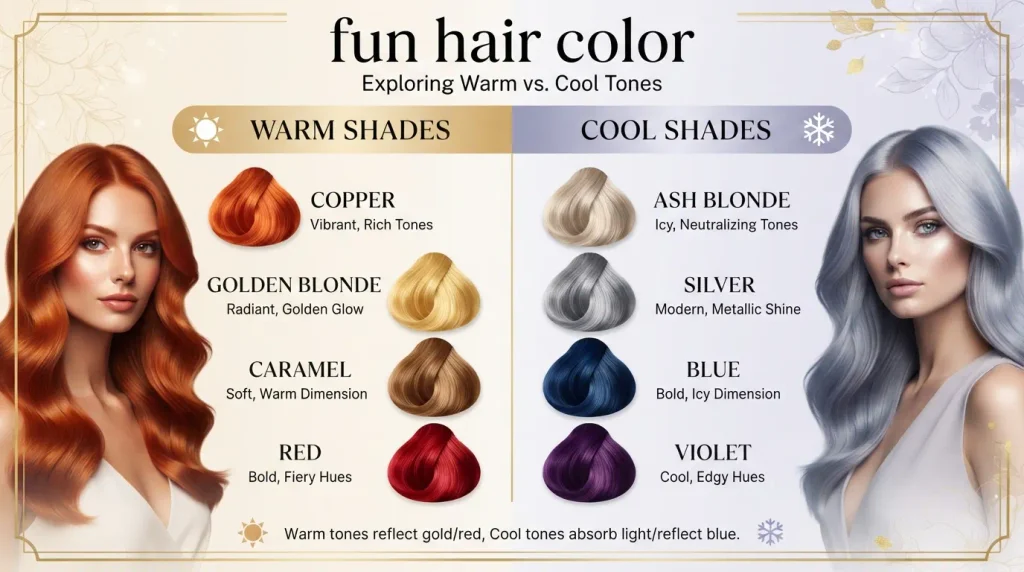
Bold hair choices used to belong solely to punk rock stages and festival crowds. Today, colorful expression has officially entered mainstream fashion, workplace trends, and everyday street style.
Social media trends let people share creative dye techniques instantly with global audiences. Seeing real people wear vivid shade combinations makes experimenting feel accessible rather than intimidating.
Breaking Free From Natural Tone Boundaries
For decades, hair dyes focused mostly on covering gray strands or matching natural brunette, blonde, and red tones. Bright shades shatter those limits by treating hair like a blank canvas for self-expression.
Wearing a vivid color can boost your mood, project confidence, and make daily outfits pop. It acts as an accessory that you wear every single hour of the day.
The Rise of Washable and Weekend Dyes
You no longer have to commit to six months of neon hair if your job requires conservative styling during the week. Temporary formulas give you complete freedom to play without long-term consequences.
Color-depositing conditioners, hair chalks, and temporary waxes let you rock a bold shade for a weekend party and wash it clean by Monday morning. This low-risk entry point makes testing new colors totally stress-free.
Understanding Dye Formulations: Which Type Do You Need?
Before grabbing a mixing bowl, you must select the right dye formula for your lifestyle, budget, and hair goals. Different formulas sit on or inside the hair shaft in distinct ways.
Temporary Formulas: One-Day Wonders
Temporary products stick strictly to the outside layer of your hair strand without opening the outer cuticle layer. They rinse away easily with a single lather of normal shampoo.
- Hair chalks brush onto dry strands for quick streaks and colorful ends.
- Color waxes coat curls and straight locks while providing light styling hold.
- Spray-on temporary dyes work great for costume parties and game days.
Semi-Permanent Dyes: The Vivid Color Gold Standard
Most bright, fun shades come in semi-permanent formats. These direct-dye formulas contain pre-formed color molecules that stain the outer cuticle without mixing with chemical developers.
Because semi-permanent dyes do not contain ammonia or heavy peroxide, they cause zero structural damage to your hair. In fact, many brands blend conditioning oils directly into the dye base to leave hair feeling soft.
Permanent and Metallic Dyes: Maximum Commitment
Permanent formulas use chemical developers to lift natural melanin pigments from inside the inner cortex, replacing them with synthetic color molecules. They stay in your hair indefinitely, though bright tones may still shift in tone over time.
Permanent options work well if you want a deep jewel tone like deep burgundy, dark forest green, or midnight navy that stays vibrant for months.
How to Pick the Best Fun Hair Color for Your Skin Tone
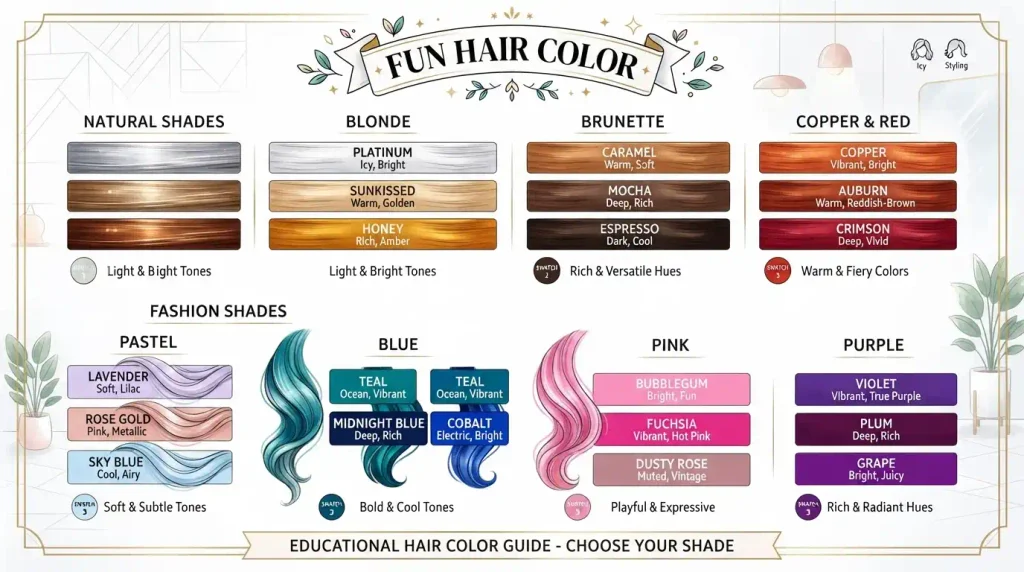
Finding a shade that makes your features pop comes down to understanding color temperature. Pairing warm or cool hair pigments with your natural undertones creates a harmonious look.
Determining Your Natural Skin Undertone
Look at the veins on the inside of your wrist under natural sunlight. This quick test helps identify your underlying skin temperature.
- Greenish veins indicate warm undertones with yellow or golden notes.
- Blue or purple veins indicate cool undertones with pink or blue notes.
- A mix of green and blue veins usually means you have a balanced neutral undertone.
Matching Tones for Maximum Impact
Cool skin tones look stunning alongside cool-spectrum shades like icy lavender, cobalt blue, mint green, and true magenta. These colors cancel out unwanted skin redness while making your eyes look bright.
Warm skin tones pair beautifully with golden peach, sunrise orange, warm coral, cherry red, and canary yellow. Neutral undertones enjoy the luxury of pulling off almost any color on the wheel.
Considering Eye Color and Wardrobe Choices
Your hair color does not exist in a vacuum; it interacts with your clothes and eyes daily. Contrast often creates the most striking visual results.
Green and Hazel Eyes
Magenta, deep violet, and plum shades create a stunning contrast that makes green eyes appear noticeably brighter.
Brown and Dark Eyes
Electric turquoise, royal blue, and warm golden copper add rich dimension against dark brown irises.
The Lightening Process: Bleaching Basics Made Simple
To achieve a bright pastel or vivid neon, you usually need to lighten dark hair first. Semi-permanent pigments act like watercolor paint on colored paper; they show up best on a pale background.
Why Lightening Is Necessary for Bright Tones
If you apply bright sky-blue dye directly over dark brown hair, the blue tint simply disappears into the dark base, creating a muddy greenish tint. Lightening strips away dark melanin, opening the canvas for true color payoff.
If your hair is already natural light blonde, you can often skip lighteners altogether and apply semi-permanent shades directly.
Understanding the Stages of Hair Lifting
As hair lightens, it passes through predictable color stages: black, dark brown, red-brown, orange, yellow, and finally pale yellow like the inside of a banana peel.
- Pastels require a very pale yellow stage 10 base with zero orange remaining.
- Deep jewel tones (like emerald or royal purple) can be applied over stage 7 or 8 yellow-orange bases.
- Electric neons work best over clean stage 9 light yellow bases.
Protective Rules for At-Home Bleaching
Bleaching alters the structural protein bonds inside your hair strands. Respecting chemical processing limits prevents severe dryness and breakage.
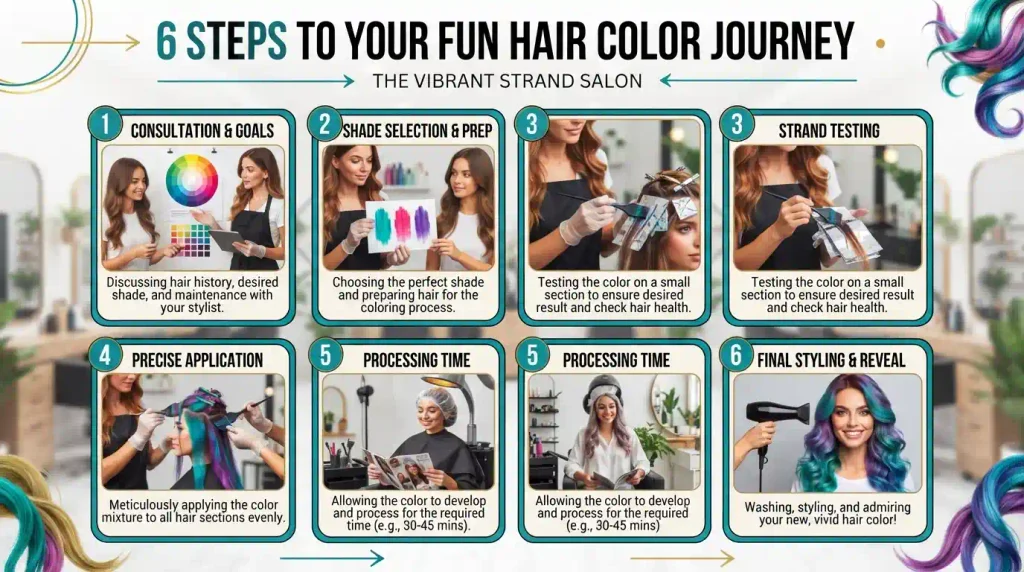
Always perform a strand test on a hidden piece of hair near your neck before applying lighteners over your entire head. Never leave lightener on your scalp longer than recommended in the package instructions.
Step-by-Step Guide to Applying Fun Hair Color at Home
Dyeing your hair at home can be clean, easy, and incredibly fun when you organize your tools before starting. Preparation prevents messy dye stains on your bathroom counters.
Gathering Your Coloring Supplies
Set up your workspace before opening any dye bottles. Having your tools ready keeps your hands clean throughout the application process.
- Non-metallic mixing bowl and tint brush
- Plastic sectioning clips and wide-tooth comb
- Petroleum jelly or heavy barrier cream for your hairline
- Dark old towels and protective rubber gloves
- Processing cap or clear plastic wrap
Preparing Your Hair Base
Wash your hair with a clarifying shampoo twenty-four hours before coloring to remove oil and hairspray residue. Do not use heavy conditioners right before dyeing, as oils can block semi-permanent dye from grabbing onto the cuticle.
Ensure your hair is completely dry before applying direct semi-permanent dyes, unless your specific product instructions state otherwise. Dry hair absorbs direct pigments far more evenly than soaking wet strands.
The Application Method
Divide your dry hair into four clean quadrants using plastic clips. Working in small half-inch sections ensures every single strand gets completely saturated with color.
- Apply barrier cream along your forehead, ears, and neck to prevent skin staining.
- Paint dye onto hair sections starting half an inch away from the roots, moving down to the ends.
- Saturate the root area last, as body heat causes roots to process color slightly faster.
- Comb through each section gently with a wide-tooth comb to distribute dye evenly.
- Pile hair under a plastic processing cap and let it sit for 30 to 45 minutes.
Rinsing out the Color Correctly
Rinse your hair with cool water until the water runs mostly clear. Avoid hot water, as heat opens the hair cuticle and washes away fresh pigment immediately.
Skip traditional shampoo during this initial rinse; instead, apply a deep conditioning treatment to seal the cuticle and lock in shine. Towel dry with an old dark towel to avoid staining fresh linens.
Advanced Coloring Techniques for Creative Looks
Once you master single-tone application, you can experiment with creative multi-tone designs. Mixing colors adds depth and movement to any haircut.
The Classic Color Melt and Ombré
A color melt transitions seamlessly from one shade at the roots into a contrasting tone at the ends. For example, dark purple roots melting into hot pink mid-lengths and pastel peach ends.
The key to a smooth melt is smudging the boundary line where two colors meet using gloved fingers. Blending the overlap prevents harsh harsh blocky lines.
Peek-a-Boo and Hidden Underlayer Color
If you want a vibrant look that you can hide on demand, peek-a-boo panel coloring is your best choice. The top section of your hair remains your natural shade, while the underlayer features bright colors.
When you wear your hair down, the color stays mostly hidden. When you pull your hair into a ponytail or half-up style, the bold shade pops out dramatically.
Split-Dyeing: Bold Symmetry
Split-dyeing involves coloring the left half of your head one shade and the right half a contrasting shade. Popular combinations include black and lilac, or turquoise and coral.
Achieving a clean center part is critical for split-dyeing success. Use a rat-tail comb to create a razor-sharp part from your forehead down to the nape of your neck, clipping one side completely away while working on the other.
How to Maintain and Protect Your Vibrant Hair Color
Vivid semi-permanent shades naturally fade over time as you wash your hair. However, following targeted hair care habits extends your shade’s life for weeks.
Washing Habits That Prevent Color Fade
Water is the primary enemy of semi-permanent hair dye. Every time you wet your hair, tiny color molecules slip out of the cuticle.
- Stretch the time between washes by using dry shampoo to absorb natural oils.
- Always wash hair using lukewarm or cool water instead of hot water.
- Switch to sulfate-free, color-safe shampoos that clean gently without stripping pigments.
The Power of Color-Depositing Conditioners
Keep your shade fresh between salon visits by mixing a dollop of your semi-permanent dye into your weekly conditioner. Applying this custom mix leaves behind a fresh layer of pigment every time you condition.
Pre-mixed color-depositing conditioners are also widely available in stores. Using them once a week maintains brightness indefinitely without extra chemical processing.
Heat Protection and Sun Care
Thermal styling tools like flat irons, curling wands, and blow dryers can burn direct dye molecules, causing instant color fading or brassy shifts.
Always apply a quality heat protectant spray before using hot tools, and lower your tool’s temperature setting below 350 degrees Fahrenheit. UV rays from sunlight also break down hair pigments, so wear a hat or use UV-shielding hair sprays during outdoor activities.
MCQs
Test your knowledge of fun hair color formulas, application methods, and shade maintenance with these multiple-choice questions.
1. Which of these is considered a natural hair color?
A) Purple
B) Black
C) Neon pink
D) Electric blue
2. Which shade is commonly associated with warm hair tones?
A) Copper
B) Ash blonde
C) Silver
D) Lavender
3. What is one benefit of temporary hair color?
A) It allows people to experiment with different shades
B) It permanently changes natural hair color
C) It changes hair texture
D) It stops hair growth
4. Which option is an example of a pastel hair color?
A) Lavender
B) Jet black
C) Dark brown
D) Deep burgundy
5. Which shade is generally considered cool-toned?
A) Golden blonde
B) Copper
C) Ash blonde
D) Caramel
6. What does a strand test help you determine?
A) How a color may look on your hair
B) How quickly your hair grows
C) Your hair length
D) Your natural hairstyle
7. Which color combination creates a rainbow hair effect?
A) Several bright colors
B) Different shades of black
C) One shade of brown
D) Only blonde tones
8. Which color can create a bold and vibrant hair look?
A) Electric blue
B) Natural brown
C) Beige
D) Soft black
9. What can affect the final result of a hair color?
A) Your existing hair color
B) Your shoe size
C) Your height
D) Your eye movement
10. What is balayage best known for?
A) Creating strategically placed lighter pieces
B) Coloring every strand the same
C) Cutting hair into layers
D) Removing all hair pigment
Answer Key
- B — Black
- A — Copper
- A — It allows people to experiment with different shades
- A — Lavender
- C — Ash blonde
- A — How a color may look on your hair
- A — Several bright colors
- A — Electric blue
- A — Your existing hair color
- A — Creating strategically placed lighter pieces
Frequently Asked Questions (FAQs)
How long does semi-permanent fun hair color usually last?
Semi-permanent hair color generally lasts between 4 to 12 washes, depending on your hair porosity, shade intensity, and shampoo type. Pastels fade faster within 4 to 6 washes, while deep blues and purples can linger for up to 15 washes or more.
Can I dye my dark hair a fun color without bleaching it first?
Yes, you can apply dark jewel tones like deep burgundy, dark violet, or forest green over unbleached dark hair. While the result will not be bright neon, it creates a subtle tint that shines beautifully under direct sunlight.
Will semi-permanent fun hair color damage my natural hair texture?
No, semi-permanent hair dyes do not contain ammonia or developer, meaning they do not damage your natural hair texture. They coat the outside of the hair shaft without lifting the cuticle, often leaving hair feeling softer due to built-in conditioning ingredients.
How can I remove a fun hair color if I do not like the result?
You can speed up fading by washing your hair with a clarifying shampoo or anti-dandruff shampoo using warm water. Vitamin C treatments mixed with sulfate shampoo also help gently lift stubborn semi-permanent pigments without using harsh chemical bleaching agents.
Is it safe to mix two different semi-permanent colors?
Yes, mixing semi-permanent shades from the same brand is completely safe and lets you create custom colors. For example, mixing blue and pink creates custom purple shades, while adding conditioner dilutes strong vivid dyes into soft pastel tones.
How do I stop bright hair color from staining my pillowcase?
Prevent pillowcase staining by making sure your hair is 100 percent dry before going to sleep. Using dark satin or silk pillowcases also protects your bedding, as damp hair can transfer residual direct dye onto light fabrics overnight.
Conclusion
Stepping into the world of fun hair color is an empowering way to celebrate your unique personality and style. Whether you choose temporary spray-on shades for a weekend or transform your look with vivid semi-permanent tones, creative coloring brings pure joy to styling routines.
Remember that great results start with proper preparation, careful shade selection, and healthy maintenance habits. Protect your investment by using sulfate-free shampoos, cool water rinses, and color-depositing conditioners to keep your locks vibrant.
Pick a shade that makes you smile, grab your coloring tools, and enjoy your colorful new look. Expressing yourself through hair color is all about having fun and owning your creative confidence!

Asjad Ali is a passionate, fun, and entertainment enthusiast who enjoys discovering interesting, amusing, and engaging content from around the web. Through laughvista.com, Asjad shares lighthearted ideas, entertaining stories, fun facts, jokes, and enjoyable content designed to bring a little more laughter and positivity into everyday life. His goal is to create content that feels natural, relatable, and easy for everyone to enjoy.
With a genuine interest in fun and entertainment, Asjad Ali focuses on creating friendly content for readers of different ages and backgrounds. laughvista.com is built around the idea that a few moments of laughter can brighten anyone’s day. Whether readers are looking for something funny, interesting, or simply entertaining, Asjad aims to make every visit enjoyable, refreshing, and worth coming back to.