

Fun monke horror refers to the popular viral subgenre of virtual reality games—pioneered by titles like Gorilla Tag and its horror fan mods—where players use arm-based movement to outrun creepy, mutated monkey chasers in uncanny, eerie maps while enjoying goofy, chaotic social gameplay.
Have you ever found yourself sprinting for your life in virtual reality using only your arms while a giant, creepy monkey chases you down dark corridors? If so, you have experienced the wildly popular phenomenon known as fun monke horror.
This unique genre blends heart-pounding jump scares with hilarious, physics-based gorilla movement. It turns terrifying monster chases into pure, unfiltered playground fun with friends.
Whether you are looking to master the movement or discover the spookiest fan-made maps, this complete guide covers everything you need to know about fun monke horror. Let’s swing right into the wild world of virtual reality primates!
What Exactly Is Fun Monke Horror?
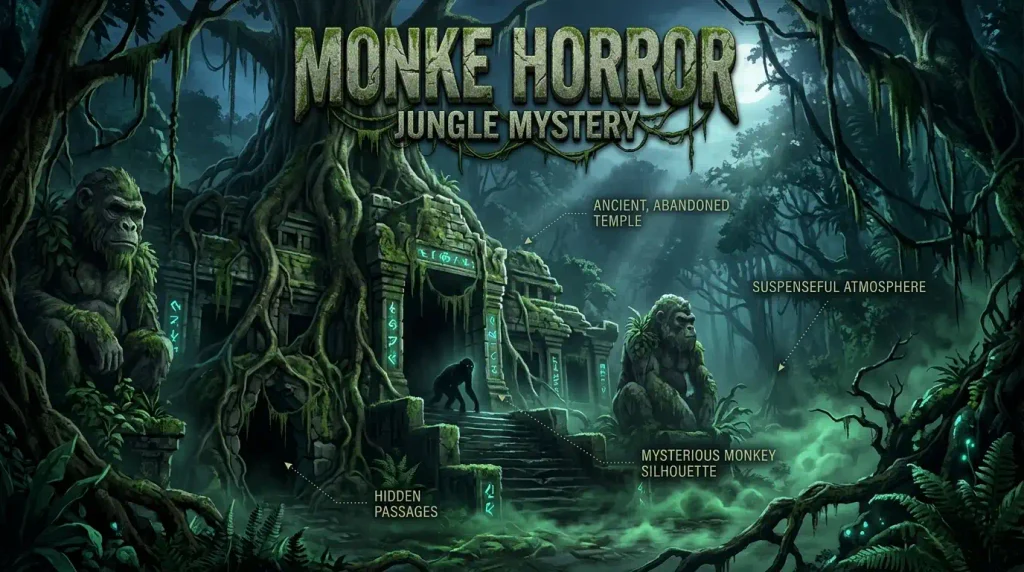
At its core, fun monke horror is a unique blend of virtual reality movement mechanics and eerie survival gameplay. Instead of relying on traditional controllers or thumbsticks, you use your actual physical arms to push off surfaces, climb walls, and swing through environments as a limbless gorilla avatar.
The horror twist comes from fan-created mods, custom server rooms, and spin-off titles inspired by the runaway success of Gorilla Tag. In these game modes, standard tag transforms into a thrilling game of survival where scary, glitched, or mutated primate monsters stalk players through creepy maps.
What makes this subgenre so special is the contrast between horror and comedy. You might be terrified while hiding in a pitch-black labyrinth, but watching your friend frantically arm-slap away from a screaming, glowing red monkey never fails to produce belly laughs.
The Secret Recipe Behind the Primate Panic
The appeal of this chaotic gaming style relies on three main ingredients that keep players coming back for hours:
- Unconventional Movement Mechanics: Moving with your arms creates a deep physical connection to your avatar, making every escape attempt feel intensely personal and active.
- Proximity Voice Chat: Hearing the desperate shrieks and hilarious banter of nearby players fading away as they get captured adds immediate comedy to every spooky encounter.
- Emergent Gameplay: The best moments are not scripted; they happen naturally when players improvise parkour routes to dodge scary chasers.
Why Horror and Gorillas Mix So Well
You might wonder why a goofy gorilla game became a breeding ground for horror. The answer lies in the uncanny nature of virtual reality environments. Low-poly retro graphics, combined with dim lighting and echoing audio, create an unsettling atmosphere known as “liminal space.”
When you place an aggressive, fast-moving monster inside these minimalist levels, the human brain instantly triggers a real fight-or-flight response. The humor acts as an essential release valve for that tension, making the horror accessible even to people who usually hate scary games.
How the Monke Movement Revolution Started
To understand where fun monke horror comes from, we have to look back at the release of Gorilla Tag by developer Another Axiom in early 2021. The game stripped away complex VR controls in favor of pure, physics-driven movement that was instantly intuitive yet difficult to master.
As millions of players jumped into the game’s public lobbies, the community began creating its own custom game modes. Players started pretending that certain lava gorillas were possessed entities, giving birth to urban legends, ARG (Alternate Reality Game) lore, and spooky creepypastas inside the VR space.
It did not take long for talented community modders to take these spooky ideas and turn them into actual playable code. Custom maps with dark mazes, scary sound effects, and specialized monster AI quickly turned a casual tag game into a thriving horror subgenre.
The Rise of Creepypastas and Server Legends
Long before formal horror mods existed, players created their own terrifying stories in quiet, private lobbies. Strange, bot-like entities with names like “PBO1,” “Daisy09,” and “Statue” became legendary across social media platforms like TikTok and YouTube.
- PB01: A mysterious blue monkey avatar rumored to play distorted music while tracking players through dark forest maps.
- Daisy09: An entity famous for playing a haunting music box tune before causing lobbies to lag or crash.
- Lucy the Skeleton: An official Halloween addition that proved the developers recognized how much the community loved a good jump scare.
These player-created myths established the tone for future standalone fun monke horror titles. They proved that VR players loved feeling a mix of spooky suspense and goofy camaraderie while exploring quiet servers.
Essential Gameplay Mechanics You Need to Master

If you want to survive a session of fun monke horror, you cannot rely on simple luck. Because your physical motion directly controls your speed and agility, learning proper movement techniques is the difference between escaping or becoming monkey food.
Unlike standard first-person shooters, there is no sprint button here. Your real-world arm speed, angle of contact, and timing dictate how fast you glide across the floor or launch off a tree trunk.
Wall Bouncing and Branching Techniques
Escaping a terrifying monster monkey usually means leaving the ground as fast as possible. Master these core maneuvers to keep yourself out of reach:
- Pinching / Wall Climbing: Hug a vertical surface or corner, pull down with both hands simultaneously, and push up to hoist your body upward in a smooth rhythm.
- Wall Bouncing: Position yourself between two parallel walls, slap down and sideways against one wall to launch across to the other, and repeat rapidly to climb high instantly.
- Branching: Navigating through tree canopies by jumping cleanly from branch to branch without falling to the dangerous ground below.
Staying Calm Under Spooky Pressure
Panic is your absolute worst enemy in fun monke horror. When a scary monster jumps out from behind a corner screaming distorted audio, your natural reaction is to flail your arms wildly.
Flailing actually slows you down because bad surface contacts reduce your forward momentum. Practice keeping your arm strokes long, parallel to the ground, and deliberate even when you hear loud footsteps rapidly approaching your position.
Popular Maps and Modes in the Monke Horror Universe
The fun monke horror subgenre features a wide variety of environments designed to test both your movement skills and your courage. Modders and game creators continue to push boundaries by building levels specifically tailored for scares.
From pitch-black underground tunnels to abandoned facility complexes, these maps turn the simple act of navigating into a high-stakes challenge. Let’s look at the most iconic map types you will encounter.
The Infamous Dungeon and Maze Maps
Mazes are a staple of horror, and they work terrifyingly well in VR. When you are confined to narrow corridors, your peripheral vision is limited, making it extremely easy for a monster gorilla to corner you.
In these levels, survival relies on spatial awareness and sound cues. Listening carefully to spatialized audio allows you to hear which direction the monster is patrolling so you can take a quiet detour through a side passage.
Low-Light Facilities and Haunted Forests
Another popular setting involves large, open areas steeped in heavy fog or complete darkness. In these maps, players are often given a limited flashlight tool that only illuminates a small cone of vision in front of them.
- The Slender-Style Forest: Players must wander through dark woods searching for items while avoiding a lurking monster that grows faster with every item collected.
- Abandoned Labs: Modern horror levels featuring security doors, vent shafts to crawl through, and alarm systems that attract glowing gorilla entities.
- Liminal Backrooms: Endless yellow corridors with damp carpets and humming lights where the floor geometry shifts to confuse fleeing players.
The Unique Social Dynamics of Monke Horror

What truly sets fun monke horror apart from traditional horror titles like Resident Evil or Phasmophobia is its joyful social scene. The terror is rarely overwhelming because you are almost always experiencing it alongside a group of enthusiastic, screaming friends.
The shared struggle creates instant bonds between strangers in public lobbies. You might find yourself forming quick tactical plans with someone you met two minutes ago just to distract the monster while others complete an objective.
The Role of Proximity Chat in Creating Comedy
Proximity voice chat means that the volume of other players’ voices scales based on how close their avatars are to you. This mechanic produces endlessly funny moments that flood social media video feeds every day.
You might be hiding quietly in a corner when you suddenly hear a friend’s voice growing louder as they sprint down a hallway screaming, “IT’S RIGHT BEHIND ME!” followed by sudden, hilarious silence as they get caught.
Teamwork vs. Self-Preservation
Most monke horror game modes present an entertaining moral dilemma for players. Do you work together to distract the scary entity, or do you use your friends as bait to secure your own escape?
- Sacrificial Distractions: Throwing shiny items or making loud noises to lure the monster away from a trapped teammate.
- Human Shields: Staying slightly behind another player during a chase scene so the monster targets them first.
- Group Escorts: Moving in a tight pack so multiple flashlights can keep dark corners fully visible.
Comparing Monke Horror to Traditional VR Horror
Why do gamers choose fun monke horror over big-budget studio horror releases? The answer comes down to accessibility, physical exertion, and overall mood.
While traditional horror games focus on slow dread, intense gore, and isolation, monke horror focuses on fast-paced movement, social interaction, and chaotic fun.
As shown in the comparison, fun monke horror provides a unique balance that keeps players active and laughing rather than overwhelmed by dark, gory themes.
Essential Hardware and Safety Tips for VR Monkeying
Because fun monke horror games demand fast physical arm movements, safety should always be your top priority. Flailing your arms while wearing a blindfold headset is a fast track to broken controllers or damaged furniture if you aren’t careful.
Before jumping into a high-speed chase away from a spooky red primate, take a few minutes to prepare your real-world play space properly.
Preparing Your Physical Play Space
To enjoy your gaming session without visiting the emergency room, set up your room following these practical steps:
- Clear a Wide Radius: Ensure you have at least six to eight feet of open space in every direction away from walls, TVs, and sharp desk corners.
- Use a Center Floor Mat: Place a small, textured rug in the absolute center of your play area so your bare feet can feel when you are drifting away from safety.
- Secure Your Wrist Straps: Always tighten your VR controller lanyards securely around your wrists before launching into a chaotic chase.
- Warn Household Members: Let pets, family members, or roommates know you will be playing a fast-moving VR game so nobody walks into your swinging fists.
Managing Motion Sickness in Fast VR Games
Arm-based movement is surprisingly easy on the stomach compared to thumbstick movement because your brain registers the physical effort of your arms moving. However, fast chases can still trigger mild motion sickness in beginners.
If you start feeling warm, dizzy, or nauseous, take off your headset immediately. Sip cold water, stand near an open window, or run a desk fan pointed directly at your body to keep yourself cool while playing.
How to Get Started with Monke Horror Mods Safely
If you already own a VR headset and want to dive into the world of fan-made monke horror mods, getting set up is easier than ever. However, you should always download files from trusted community repositories to keep your system safe.
Most fan-created horror content is hosted on dedicated community Discord servers, itch.io pages, or side-loading platforms like SideQuest for standalone headsets.
Step-by-Step Installation Basics
While specific installation steps vary based on your VR hardware, the general workflow follows a simple pattern:
- For PCVR Users: Install a mod manager tool, locate the verified horror mod package, and install it directly into your game directory.
- For Standalone Quest Users: Use platform utilities or developer mode tools to sideload indie monke horror spin-offs directly onto your device.
- Joining Private Codes: Many custom horror modes require you to type a specific room code on the in-game computer board to join spooky custom lobbies.
Always make sure your main game is updated to the latest version before adding mods to avoid crashing your headset during gameplay.
The Future of the Monke Horror Subgenre

What started as a silly community trend inside a simple VR tag game has expanded into a full-fledged indie genre. Independent developers are now creating standalone titles specifically designed around physical primate movement and horror themes.
We are beginning to see games with fuller storylines, complex puzzle mechanics, dynamic monster AI, and advanced sound design built entirely for this style of play.
As virtual reality hardware becomes lighter, wireless, and more accessible, the popularity of fun monke horror will only continue to grow. It proves that simple, great physical mechanics combined with multiplayer fun will always beat fancy graphics.
Practice Exercises
Test your knowledge of fun monke horror mechanics, history, and survival strategies with this quick quiz!
1. What type of game is Monke Horror?
A. Racing game B. Horror game C. Cooking game D. Sports game
2. What is commonly used to create fear in horror games?
A. Cute animals B. Jump scares C. Funny songs D. Colorful balloons
3. Which setting is common in horror games?
A. Dark forest B. Sunny beach C. Shopping mall D. Flower garden
4. What does a flashlight help players do?
A. Fly B. See in dark areas C. Become invisible D. Build houses
5. Which sound can make a horror game scarier?
A. Gentle bird songs B. Sudden scary noises C. Happy applause D. Soft rain only
6. What is a jump scare?
A. A sudden frightening moment B. A new game level C. A dance move D. A type of puzzle
7. Which place might appear in a monkey-themed horror game?
A. Haunted jungle B. Candy shop C. Soccer field D. Toy store
8. What is a common goal in horror games?
A. Avoid danger and survive B. Bake a cake C. Win a fashion show D. Plant flowers
9. Which item often helps players explore dark locations?
A. Flashlight B. Pillow C. Paintbrush D. Sunglasses
10. What makes a horror game exciting for many players?
A. Mystery and suspense B. Long shopping lists C. Cooking lessons D. Gardening tips
Answer Key
- B — Horror game
- B — Jump scares
- A — Dark forest
- B — See in dark areas
- B — Sudden scary noises
- A — A sudden frightening moment
- A — Haunted jungle
- A — Avoid danger and survive
- A — Flashlight
- A — Mystery and suspense
FAQs
What makes fun monke horror different from standard horror VR games?
Fun monke horror uses physical arm-swinging movement mechanics instead of controller buttons. This creates high-energy, fast-paced chases combined with funny proximity voice chat interactions, making the experience entertaining rather than overwhelming or graphic.
Do I need a powerful gaming PC to play monke horror games?
No, many popular monke horror spin-offs and fan games are available directly on standalone VR headsets like the Meta Quest. You only need a PC if you plan to run heavy custom graphic mods through SteamVR.
Is fun monke horror safe for younger players to enjoy?
While the movement is great physical exercise, some custom horror mods feature sudden jump scares and loud screaming noises. Parents should check specific mod content and moderate public voice chat settings for younger players.
How do I prevent motion sickness while running from monke monsters?
Start with short play sessions and keep a floor fan pointed at your body to stay cool. Since arm-based movement matches your physical effort, it causes less motion sickness than traditional thumbstick walking for most people.
Can I play fun monke horror single-player, or is it multiplayer only?
You can play many horror maps alone in private offline lobbies to practice your movement and explore lore secrets. However, playing with friends in multiplayer lobbies provides the best mix of scares and laughter.
Conclusion
The rise of fun monke horror proves that virtual reality gaming is at its absolute best when it embraces physical movement, unpredictable social interactions, and lighthearted fun. By combining the hilarious mechanics of arm-swinging locomotion with the thrilling tension of scary monster chases, this subgenre has captured the imagination of millions of VR players worldwide.
Whether you are scaling high tree canopies, dodging spooky entities in pitch-black corridors, or laughing along with friends as proximity chat fades into the distance, there is never a dull moment in this chaotic world. Armed with the movement tricks, safety tips, and map knowledge from this guide, you are ready to jump into the action.
Clear out your play space, secure your controller wrist straps, and get ready to experience the wildest subgenre in virtual reality. Gather your group of friends, jump into a spooky custom room, and see if you have what it takes to survive the monkey madness!

Asjad Ali is a passionate, fun, and entertainment enthusiast who enjoys discovering interesting, amusing, and engaging content from around the web. Through laughvista.com, Asjad shares lighthearted ideas, entertaining stories, fun facts, jokes, and enjoyable content designed to bring a little more laughter and positivity into everyday life. His goal is to create content that feels natural, relatable, and easy for everyone to enjoy.
With a genuine interest in fun and entertainment, Asjad Ali focuses on creating friendly content for readers of different ages and backgrounds. laughvista.com is built around the idea that a few moments of laughter can brighten anyone’s day. Whether readers are looking for something funny, interesting, or simply entertaining, Asjad aims to make every visit enjoyable, refreshing, and worth coming back to.