

SEO Title: What Is a Fun Meter? How to Measure Joy in Life URL Slug: fun-meter-guide-measuring-joy Meta Description: Learn how a fun meter works, why tracking your enjoyment boosts well-being, and practical ways to measure joy daily. Start boosting your fun today!
Direct Answer: A fun meter is a visual gauge or mental tool used to measure how much enjoyment, excitement, and overall joy you experience during an activity, event, or everyday life. By tracking your amusement levels, you can intentionally design a happier, more balanced routine that prioritizes genuine play and personal satisfaction.
Ever feel like your week was completely packed, yet you somehow missed out on having a good time? It is surprisingly easy to run on autopilot while completely forgetting to enjoy the journey.
That is where a fun meter comes in handy. It gives you a clear, instant visual on whether you are actually enjoying your day or just powering through tasks.
When you learn to monitor your personal fun meter, you unlock a simple, playful way to bring more energy and lightness back into your routine.
What Exactly Is a Fun Meter?

A fun meter is a physical gauge, a digital tracking tool, or a playful mental checklist used to measure enjoyment. Think of it like a fuel gauge in a car, but instead of tracking gasoline, it tracks your personal joy levels. When the needle sits in the red zone, things feel boring, tedious, or exhausting. When it swings into the green zone, you are fully engaged, laughing, and living in the moment.
The concept originated as a lighthearted joke in sports, outdoor activities, and workplaces. Teammates or colleagues would ask if the fun meter was maxed out during an exciting event. Over time, psychologists and lifestyle experts realized that this simple concept carries genuine value. Tracking your amusement gives you instant feedback about how you spend your energy.
Using a meter helps you pause and evaluate your current activity without overthinking it. It transforms abstract feelings of happiness into something visible and actionable. If your reading stays consistently low, you know it is time to shift gears and invite a little spontaneous play into your schedule.
The Psychology Behind Measuring Play
Humans are naturally wired to respond to feedback loops. When you track a physical goal like daily steps or sleep hours, you automatically pay more attention to it. The same logic applies when you track your daily enjoyment with a fun meter.
Positive psychology shows that intentional play reduces stress hormones like cortisol while boosting mood-enhancing chemicals like dopamine. Measuring your amusement brings conscious awareness to these moments. It prompts your brain to look for opportunities to smile, laugh, and relax throughout the day.
Physical Gauges vs. Mindset Tools
A physical meter often takes the shape of a novel desk accessory, a sticker, or a dashboard display. These physical items use a colorful needle that moves from “Boring” to “Off the Charts.” They serve as great visual cues to keep your workspace cheerful and lighthearted.
On the other hand, a mindset-based meter functions as an internal check-in system. You simply stop and ask yourself where your current activity lands on a scale from one to ten. Both styles serve the same core purpose: reminding you that your happiness matters just as much as your task list.
Why You Need a Fun Meter in Your Daily Routine
Modern life often pushes us to focus exclusively on productivity, deadlines, and chores. When work takes over, leisure activities are usually the first thing dropped. Maintaining a fun meter keeps your life balanced by making personal enjoyment a visible priority.
Regularly assessing your happiness prevents burnout before it starts. When you notice your joy gauge hovering near empty for several days in a row, you can adjust your plans before exhaustion sets in. It encourages you to treat recreation as an essential daily requirement rather than an optional luxury.
Beating Burnout with Intentional Enjoyment
Burnout develops gradually when high stress meets low personal satisfaction. Many people attempt to fix fatigue by simply sleeping more, but rest alone does not always rebuild enthusiasm. You also need active engagement in things that make you feel alive.
Checking your fun meter provides an early warning signal for emotional fatigue. If your rating remains at zero despite getting enough sleep, you are likely experiencing a play deficit. Adding small bursts of playful activity quickly refills your emotional reserves.
Boosting Productivity Through Playful Breaks
Taking time out for play might feel counterproductive, but it actually sharpens your mental clarity. Short, engaging breaks clear cognitive fatigue and spark creative problem-solving.
When you step away from a tough project to do something genuinely amusing, your brain continues processing information in the background. Returning to your desk after a quick boost on your fun meter usually leads to faster, better work.
How to Build and Use Your Own Fun Meter
Creating a personalized system to track your joy is simple, creative, and completely customizable. You do not need expensive software or fancy tools to get started. All it takes is a clear framework that fits naturally into your daily routine.
Step 1: Define Your Joy Markers
Everyone experiences enjoyment differently. What brings high energy to an extrovert might feel completely overwhelming to an introvert. To build an accurate fun meter, you must first define what high-level amusement means to you.
- High-Energy Play: Activities like team sports, live concerts, dancing, or group games that create high excitement.
- Low-Energy Play: Quiet activities like reading a light novel, working on a craft, or sitting in nature that bring gentle contentment.
- Social Play: Shared laughter, deep conversations, board games, or cooking together with friends and family.
- Solo Play: Independent hobbies, creative writing, playing an instrument, or exploring new places alone.
Step 2: Establish a Simple Scale
Keep your scoring system simple, so it stays quick and easy to use. A basic three-tier or five-tier scale works best for fast daily check-ins.
- Low (Red Zone): The activity feels like a chore, causes unnecessary boredom, or drains your energy completely.
- Medium (Yellow Zone): The activity is pleasant and comfortable, but it lacks excitement or special memorable moments.
- High (Green Zone): You are fully absorbed, losing track of time, laughing, and feeling energized.
Step 3: Set Regular Check-In Points
Consistency is what makes this tool effective. Pick two or three specific moments during your day to check your meter.
Good check-in times include right after lunch, immediately after work, or right before dinner. Ask yourself a quick question: Where did my fun meter land over the last few hours? If the answer is low, plan a small, delightful activity for later in the evening.
Comparing Different Fun Meter Formats
Choosing the right format depends on whether you prefer physical objects, digital apps, or quick mental habits. Here is how the most common formats compare:
The Science of Play: How Fun Changes Your Brain
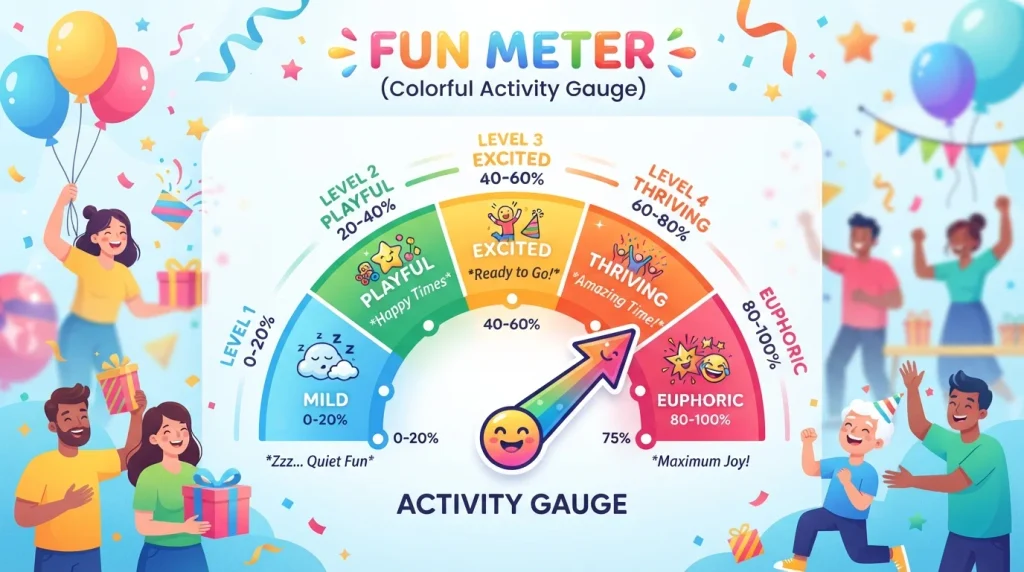
Understanding how play impacts your brain helps explain why monitoring your fun meter is so effective. Play is not just an escape from reality; it is a fundamental biological drive that shapes how we think, feel, and connect with others.
When you participate in an activity that maxes out your fun meter, your brain releases a combination of powerful neurochemicals. These chemicals improve your immediate mood and strengthen long-term brain health.
The Neurochemistry of Joy
- Dopamine: The reward chemical that drives motivation, focus, and goal-oriented behavior.
- Endorphins: Natural pain relievers that create feelings of lightness and physical relaxation.
- Serotonin: The mood stabilizer that promotes long-term feelings of well-being and emotional security.
- Oxytocin: The bonding hormone released during shared laughter and warm social interactions.
Long-Term Cognitive Benefits
Regularly engaging in high-fun activities protects your brain against cognitive decline. Play stimulates neuroplasticity, which is your brain’s ability to form new neural connections and adapt to fresh challenges.
Adults who make space for play show higher creative problem-solving skills, better emotional resilience, and stronger social bonds. Keeping your fun meter in the green is an investment in your mental longevity.
Creative Ways to Max Out Your Fun Meter
If your gauge has been hovering in the low zone lately, you do not need a costly vacation to push it back up. Small, intentional changes to your daily habits can dramatically boost your score.
Turn Mundane Chores into Games
Daily chores are often major drains on your fun meter. However, applying basic game design principles to boring tasks makes them surprisingly engaging.
- Time-Attack Mode: Set a timer for ten minutes and see how many dishes you can wash before it rings.
- Musical Pairing: Play an upbeat soundtrack or audio drama while folding laundry or scrubbing floors.
- Reward Milestones: Pair a tough task directly with a favorite reward, like watching a short video right after cleaning your desk.
Try Novelty and Spontaneity
Unpredictability naturally spikes dopamine production in your brain. Doing something slightly out of the ordinary instantly pushes your fun meter into high gear.
Take a completely new route home from work, try a food you have never tasted before, or pick up a random craft kit from a local shop. Small moments of novelty break up repetitive routines and keep your mind active.
Practice Shared Laughter
Laughter is one of the fastest ways to jump-start a low fun meter. It reduces tension immediately and builds warm connections between people.
Host a low-stakes game night, watch a stand-up comedy special with a friend, or share lighthearted stories during dinner. Enjoying a laugh with others multiplies the joy of the experience.
Common Obstacles to Keeping Your Fun Meter High
Even with the best intentions, everyday obstacles can drag your meter down. Recognizing these common traps helps you clear them quickly.
Guilt Over Unproductive Time
Many adults struggle with feeling guilty whenever they step away from work or chores. You might worry that spending time on pure amusement is lazy or irresponsible.
Reframe play as an essential form of maintenance. Just like a car requires oil changes to keep running smoothly, your mind needs regular enjoyment to function at its best. Taking time to play makes your working hours more effective.
Over-Scheduling Your Free Time
Turning hobbies into rigid commitments can destroy the joy they used to provide. When your schedule becomes overly packed with mandatory activities, play feels like just another item on your to-do list.
Leave open, unstructured time in your weekly calendar. Spontaneity thrives when you have freedom to choose what you want to do in the moment.
Passive Consumption vs. Active Play
Scrolling through social media or watching TV mindlessly can feel relaxing, but it rarely moves your fun meter into the top zone. Passive screen time often leaves people feeling disengaged or tired.
Swap out passive consumption for active engagement. Physical movement, creative projects, interactive games, and face-to-face social time provide much higher levels of genuine satisfaction.
How Businesses and Schools Use Fun Meters
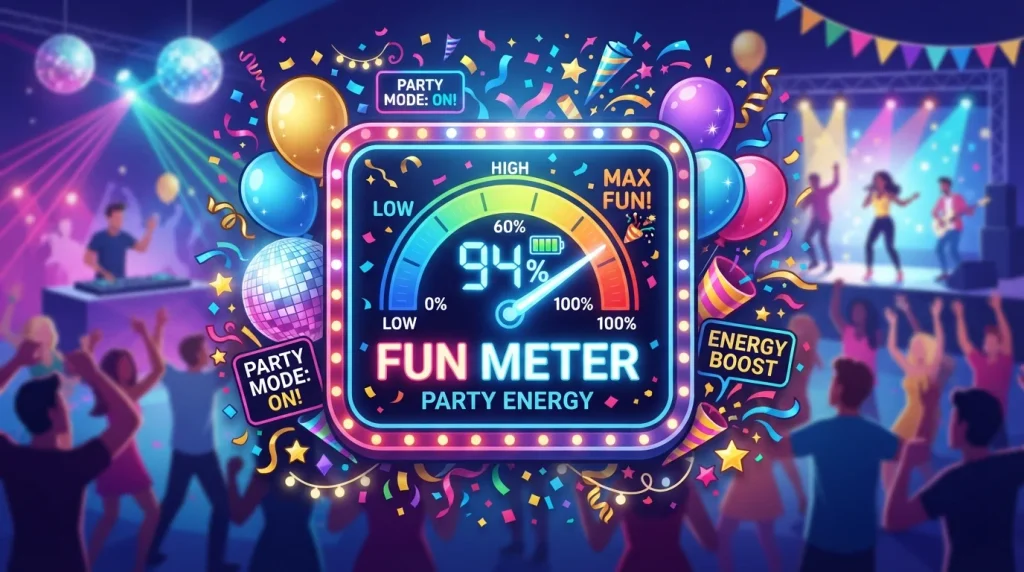
The application of a fun meter extends beyond personal lifestyle habits. Forward-thinking companies, classrooms, and sports teams use these tools to create positive, high-performing environments.
Gamifying Work Culture
Workplaces that track employee satisfaction using lighthearted gauges often report higher team morale and lower turnover rates. Simple visual tools encourage teams to celebrate small wins, take restorative breaks, and maintain open lines of communication.
When teams track their collective fun meter during major projects, managers can easily tell when stress levels are rising too high. Adjusting workloads before exhaustion hits keeps projects moving smoothly while maintaining high team spirit.
Classroom Engagement and Interactive Learning
Teachers use visual fun meters to keep students focused and excited about learning. Tracking class enjoyment helps educators see which teaching methods spark genuine interest.
When a lesson plan feels dry, a quick check of the room’s meter prompts the teacher to introduce a group game, physical stretch break, or interactive quiz. Keeping engagement high leads to better learning retention for students of all ages.
Advanced Strategies: Tracking Trends Over Time
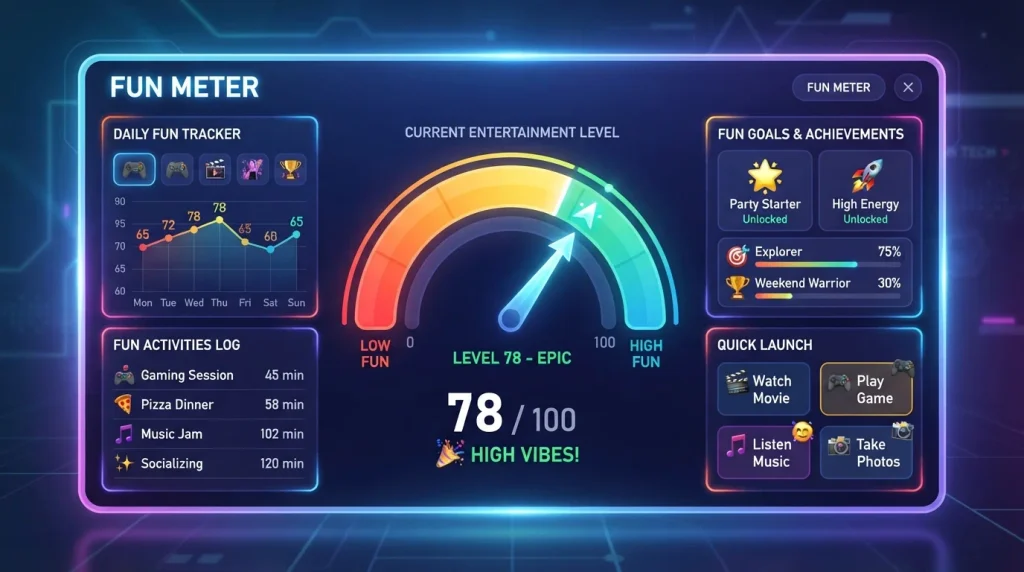
Once you master basic daily check-ins, you can start tracking trends over weeks and months. Analyzing long-term data provides surprising insights into what truly drives your personal happiness.
Mapping Your Weekly Joy Patterns
Keep a brief log of your daily ratings in a notebook or digital document for three weeks. Look for consistent patterns in your entries.
- Which days of the week consistently show the lowest scores?
- What specific activities consistently push your meter into the green zone?
- Are there particular people or environments that repeatedly drain your energy?
Identifying these trends helps you make smarter lifestyle choices. You can proactively schedule fun activities on days that tend to be stressful, balancing out low points before they affect your mood.
Designing a Fun-First Weekly Schedule
Instead of fitting leisure into whatever free time remains at the end of the week, block out time for high-fun activities first. Treat these events with the same respect you give to important business meetings.
Protecting these non-negotiable blocks of recreation ensures that your fun meter stays consistently elevated, regardless of how busy your work week becomes.
Practice Exercise
Test your knowledge on how to effectively use a fun meter to optimize your daily play and well-being.
- What is a fun meter generally designed to measure?
A) Temperature
B) Level of fun or enjoyment
C) Distance
D) Weight - Which activity could increase a fun meter reading?
A) Playing a game
B) Sleeping
C) Doing nothing
D) Waiting quietly - A fun meter can be used as a playful way to rate what?
A) Enjoyment
B) Height
C) Speed
D) Age - Which setting might use a fun meter as a creative activity?
A) Party
B) Laboratory only
C) Bank
D) Library catalog - What could a high fun meter score represent?
A) More enjoyment
B) Less activity
C) Lower temperature
D) Greater distance - Which feature could make a digital fun meter more engaging?
A) Colorful graphics
B) Blank screen
C) No controls
D) Hidden display - What might a fun meter display?
A) A fun score
B) A person’s address
C) A passport number
D) A bank balance - Which activity could be rated with a fun meter?
A) Playing a board game
B) Measuring a table
C) Counting books
D) Checking a clock - Why might people use a fun meter at an event?
A) To add a playful element
B) To calculate taxes
C) To measure rainfall
D) To record attendance only - What is the main idea behind a fun meter?
A) Making enjoyment measurable in a playful way
B) Measuring engine oil
C) Calculating distance
D) Measuring room temperature
Answer Key
- B
- A
- A
- A
- A
- A
- A
- A
- A
- A
FAQs
What is a fun meter?
A fun meter is a physical, digital, or mental tool used to gauge your level of enjoyment during an activity. It gives you instant feedback on whether your day is balanced or needs a boost of playful energy.
How do I check my fun meter daily?
Check your fun meter by pausing two or three times a day to rate your current enjoyment on a simple scale. If your score feels low, make time for a brief, energizing activity to restore balance.
Can a fun meter help prevent workplace burnout?
Yes, monitoring a fun meter helps prevent workplace burnout by identifying rising stress levels early. Tracking your enjoyment reminds you to schedule meaningful breaks and maintain a healthy, balanced routine.
What is the difference between passive rest and active fun?
Passive rest involves low-engagement activities like scrolling social media, while active fun involves stimulating experiences like sports, games, or hobbies. Active fun raises your meter faster by actively releasing dopamine and endorphins.
Where can I get a physical fun meter for my desk?
Physical gauges are available online through novelty gift shops and office supply retailers. You can also craft your own visual dial using basic cardboard, markers, and a movable paper pointer.
Is measuring fun scientifically backed?
Yes, measuring enjoyment aligns with positive psychology principles that emphasize intentional play and feedback loops. Tracking positive experiences increases self-awareness and helps you make choices that lower long-term stress.
Conclusion
Incorporating a fun meter into your life is a simple, effective way to ensure your daily routine remains rewarding. By regularly checking your enjoyment levels, you build a healthy habit of prioritizing play, creativity, and balance alongside your hard work.
Remember that fun looks different for everyone, so customize your tracking system to fit your unique lifestyle. Whether you prefer a playful desk accessory or a quick mental check-in, keeping your joy gauge in mind leads to better mood stability and higher creative energy.
Take a quick moment right now to check your personal fun meter score. If the needle is hovering on the lower side, step away from your screen and do something small that brings a genuine smile to your face.

Asjad Ali is a passionate, fun, and entertainment enthusiast who enjoys discovering interesting, amusing, and engaging content from around the web. Through laughvista.com, Asjad shares lighthearted ideas, entertaining stories, fun facts, jokes, and enjoyable content designed to bring a little more laughter and positivity into everyday life. His goal is to create content that feels natural, relatable, and easy for everyone to enjoy.
With a genuine interest in fun and entertainment, Asjad Ali focuses on creating friendly content for readers of different ages and backgrounds. laughvista.com is built around the idea that a few moments of laughter can brighten anyone’s day. Whether readers are looking for something funny, interesting, or simply entertaining, Asjad aims to make every visit enjoyable, refreshing, and worth coming back to.