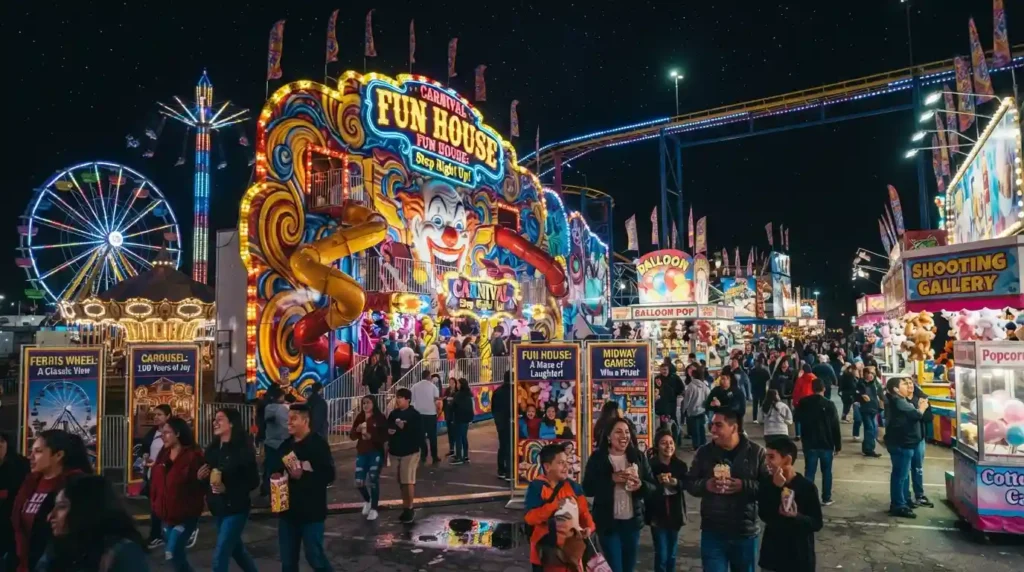
A fun house carnival attraction is an interactive walkthrough amusement designed to test your balance, perception, and senses using classic obstacles like tilt rooms, spinning barrels, wavy mirrors, and moving staircases. It offers a nostalgic, thrilling experience suitable for fairgoers of all ages looking for lighthearted midway entertainment.
Step onto the wooden midway planks, and you will instantly recognize the bright neon paint and eccentric sounds of a classic fun house carnival attraction. That towering visual facade holds decades of tradition, trickery, and pure nostalgic delight for visitors of all ages.
Whether you are stepping into a fun house carnival maze for the first time or sharing the thrill with your own kids, the magic never fades. Let us explore everything that makes this timeless fairground staple so unforgettable.
The Magic and Origins of the Fun House Carnival Experience
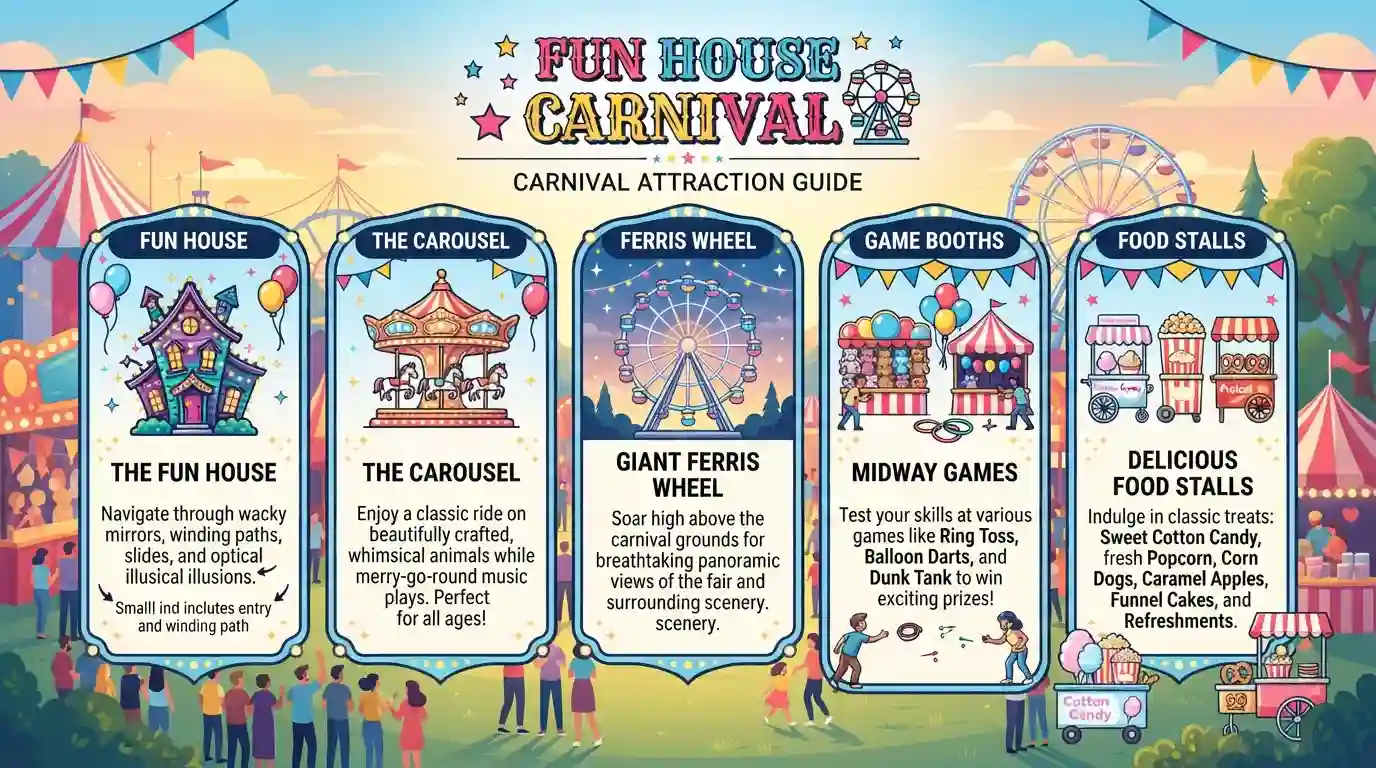
Long before massive roller coasters dominated amusement parks, simple interactive walkthroughs captivated crowds looking for a good laugh. The fun house carnival tradition grew out of early twentieth-century seaside resort culture, where venue owners sought low-cost ways to entertain families.
Early Beginnings at Coney Island and Seaside Resorts
During the early 1900s, venues like Coney Island introduced novelty attractions featuring shaking floors, sudden air blasts, and simple distorting mirrors. These early mechanical mazes were designed to delight crowds through mild disorientation and shared hilarity.
As traveling fairs gained popularity across North America, engineers modified these stationary attractions into transportable, trailer-mounted units that could move smoothly from city to city every week.
The Evolution of Travelling Midway Attractions
By the mid-twentieth century, mobile carnivals featured multi-story fun houses packed with mechanical marvels. Craftsmen painted giant, vibrant murals on the outer panels to attract crowds strolling down the midway night after night.
Modern iterations combine old-school mechanical trickery with updated safety features, LED lighting effects, and immersive soundscapes to keep the experience fresh for contemporary audiences.
Iconic Features Found Inside a Classic Carnival Fun House
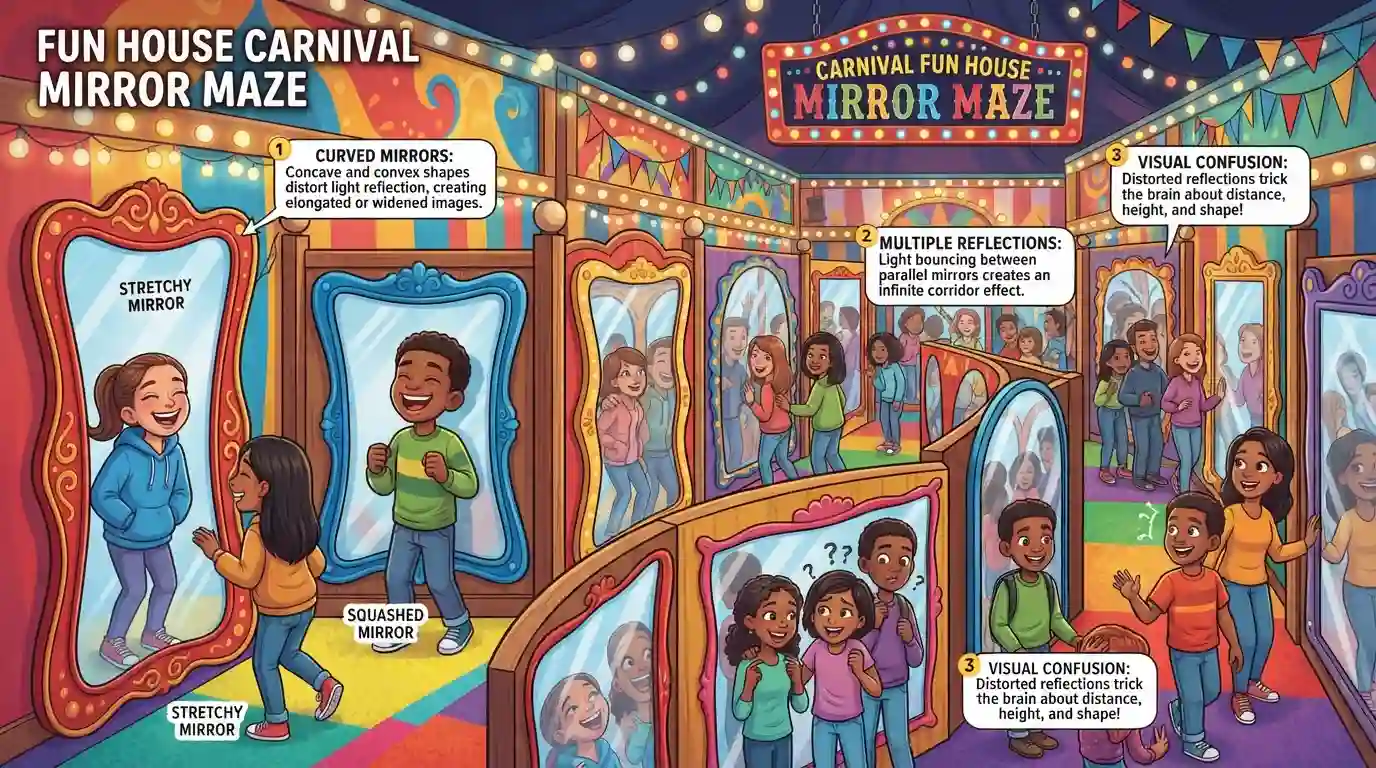
Every layout offers a unique sequence of obstacles, but a handful of legendary features appear across almost every classic design.
| Obstacle Name | Primary Illusion or Physical Effect | Typical Challenge Level | |
Distorting Hallway Mirrors
Distorting mirrors are usually the first thing you encounter upon entry. Curved glass warps your reflection to make you look extraordinarily tall, wide, or strangely bent.
These simple optical illusions set a playful tone right away, putting smiles on everyone’s faces before the physical challenges begin.
The Rotating Barrel
Few obstacles are as famous as the giant spinning drum or rotating barrel. As you step inside, the interior walls rotate around a narrow central catwalk.
Even though the walking surface remains flat, your visual system registers constant motion, tricking your brain into leaning or feeling off-balance.
Moving Bridge and Shaking Floors
Shaking floor panels use simple eccentric motors beneath sturdy rubber treadways. As you walk across, the floor beneath your feet vibrates or shifts side-to-side.
This unpredictable movement forces you to adjust your posture with every step, creating a hilarious challenge for friends trying to walk in a straight line together.
The Inclined Tilt Room
Gravity seems to bend inside a properly designed tilt room. By angling the walls and floor relative to the actual horizon, designers create an environment where your eyes contradict your inner ear.
Balls appear to roll uphill, and standing completely straight feels virtually impossible without grabbing a handrail.
How Designers Trick Your Senses and Balance
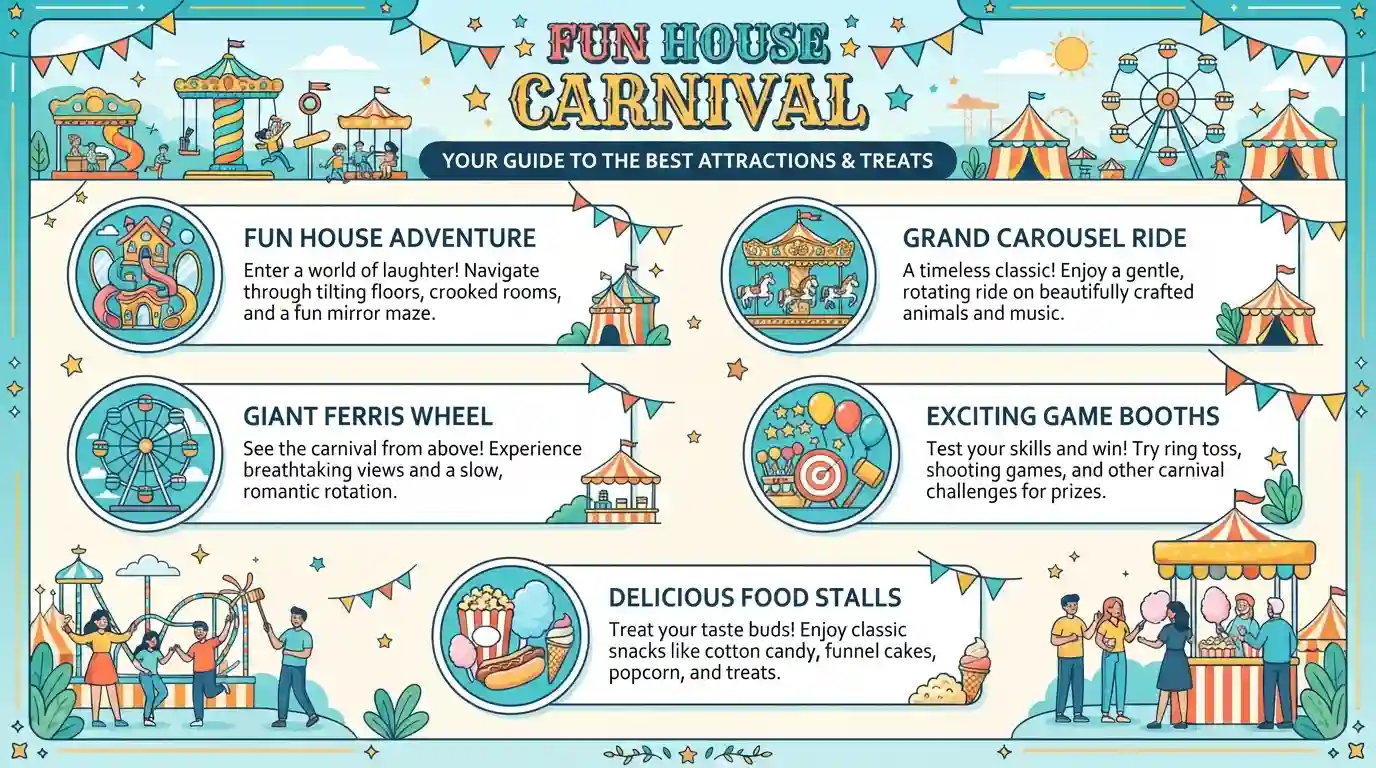
Creating a memorable walkthrough requires a clever blend of psychology, physics, and architectural engineering.
Optical Tricks and Visual Disorientation
Designers use high-contrast blacklight paint, flashing strobe lights, and forced perspective corridors to throw off your spatial awareness.
- Bold diagonal patterns painted on walls make flat hallways look like they are sloping upward or downward.
- Darkened corridors with strategically placed neon lines strip away depth perception.
- Mirrors positioned at precise 45-degree angles create the illusion of endless, dead-end hallways.
Mechanical Trickery and Balance Science
Your body relies on visual cues, muscle feedback, and your inner ear balance system to stand upright. Fun house elements intentionally force these three sensory inputs to disagree.
When your eyes report that the room is level but your inner ear registers an angle, your brain experiences mild, harmless disorientation that feels exciting.
Safety Tips for Navigating the Midway Fun House
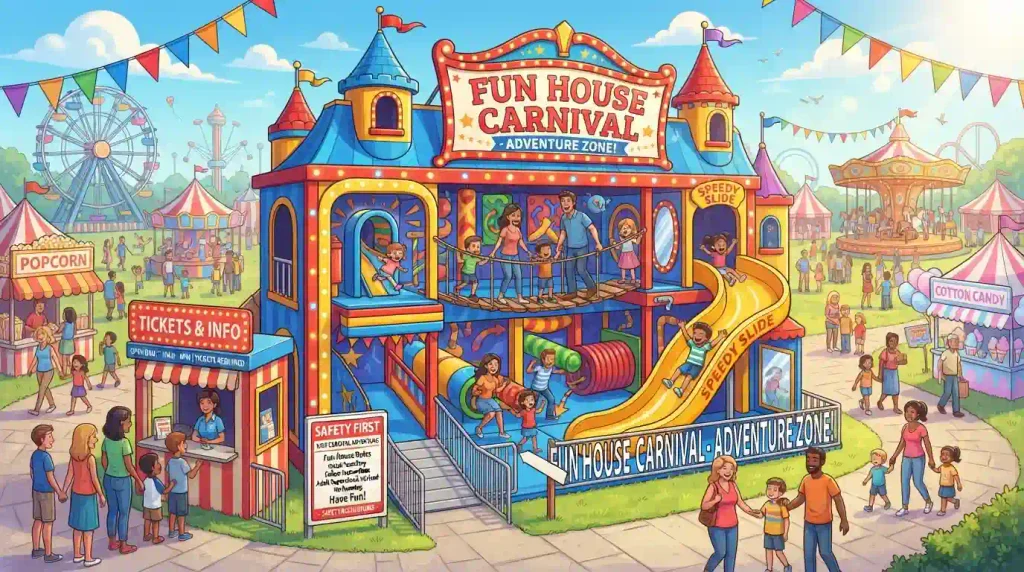
While these attractions are built for lighthearted family enjoyment, keeping basic safety precautions in mind ensures everyone leaves with great memories.
Recommended Footwear and Clothing
Proper attire makes navigating moving machinery much easier and safer.
- Wear closed-toe shoes like sneakers with good rubber grip to prevent slipping on moving treads.
- Avoid loose scarves, long skirts, or untied shoelaces that could catch on spinning parts.
- Keep handheld items like phones, keys, or soft drinks secured in zipped pockets before stepping inside.
Navigating Obstacles Responsibly
Pacing yourself inside the walkthrough keeps the attraction fun for your group and those behind you.
- Hold onto available handrails whenever crossing shaking floors or passing through rotating barrels.
- Allow plenty of space between yourself and the person ahead of you, especially on moving staircases.
- If a particular mechanical feature feels overwhelming, use the clear bypass walkways usually provided alongside intense sections.
Practice Exercise
Test your knowledge of fairground history, mechanics, and fun house design with these ten multiple-choice questions.
1. What is a fun house at a carnival?
A) An entertainment attraction
B) A restaurant kitchen
C) A library
D) A classroom
2. Which feature is commonly associated with a fun house?
A) Mirrors
B) Office desks
C) Bookshelves
D) Farm equipment
3. What can visitors experience inside a fun house?
A) Optical illusions and playful obstacles
B) Cooking lessons
C) Swimming competitions
D) Driving classes
4. Which carnival attraction usually spins around?
A) Carousel
B) Library
C) Museum
D) Theater screen
5. What is a carnival mainly designed for?
A) Entertainment and recreation
B) Business meetings
C) School exams
D) Medical treatment
6. What can make a fun house visually exciting?
A) Bright colors and creative decorations
B) Plain walls only
C) Empty rooms
D) Office furniture
7. What do carnival visitors commonly use to enter attractions?
A) Tickets
B) Passports only
C) School certificates
D) Library cards
8. Which attraction can test balance and movement?
A) Fun-house obstacle course
B) Food stall
C) Ticket booth
D) Information desk
9. Why are mirrors often used in fun houses?
A) To create amusing visual effects
B) To provide lighting
C) To store tickets
D) To play music
10. What can make a carnival visit more enjoyable?
A) Games, rides, and attractions
B) Closed attractions
C) Empty spaces
D) No activities
Answer Key
1-A | 2-A | 3-A | 4-A | 5-A | 6-A | 7-A | 8-A | 9-A | 10-A
FAQs
Are carnival fun houses suitable for young children?
Yes, most fun houses are designed for broad family appeal. Young children can navigate them easily when accompanied by an adult, though parents should guide them through moving elements like rotating barrels or shaking floors carefully.
How long does a typical fun house walkthrough take?
A standard walkthrough takes between 5 and 10 minutes to complete. The exact duration depends on the size of the attraction, your walking pace, and how long you spend enjoying the interactive mirror rooms and physical obstacles.
Can people who experience motion sickness enjoy a fun house?
Yes, visitors prone to motion sickness can still enjoy the experience by taking simple precautions. You can simply use the clear bypass paths to walk around spinning barrels or tilted rooms while still enjoying the rest of the layout.
Are mobile carnival fun houses safe to walk through?
Yes, modern carnival fun houses undergo strict local safety inspections and regular maintenance. They feature built-in handrails, emergency lighting, non-slip surfaces, and accessible bypass lanes to ensure a safe environment for all guests.
What makes a fun house different from a haunted house?
A fun house focuses on lighthearted mechanical obstacles, balance challenges, and optical illusions suitable for all ages. A haunted house uses scary themes, actor jump scares, and dark corridors intended specifically to frighten visitors.
Conclusion
Visiting a fun house carnival attraction remains one of the most delightful experiences on any fairground midway. From distorting mirrors to rotating barrels, these classic walkthroughs blend physical play with optical trickery to create lasting memories for fairgoers of all generations.
Next time you hear the cheerful sounds of fairground music and spot those colorful painted panels, grab your family or friends and step right in. Enjoy the laughter, test your balance, and immerse yourself in a timeless midway tradition.

Asjad Ali is a passionate, fun, and entertainment enthusiast who enjoys discovering interesting, amusing, and engaging content from around the web. Through laughvista.com, Asjad shares lighthearted ideas, entertaining stories, fun facts, jokes, and enjoyable content designed to bring a little more laughter and positivity into everyday life. His goal is to create content that feels natural, relatable, and easy for everyone to enjoy.
With a genuine interest in fun and entertainment, Asjad Ali focuses on creating friendly content for readers of different ages and backgrounds. laughvista.com is built around the idea that a few moments of laughter can brighten anyone’s day. Whether readers are looking for something funny, interesting, or simply entertaining, Asjad aims to make every visit enjoyable, refreshing, and worth coming back to.