
Horses are incredible creatures with 360-degree vision, complex body language, and powerful memories. These fun horse facts reveal how horses talk with their ears, sleep while standing up, and build deep emotional bonds with humans, proving there is far more to them than just speed and strength.
Have you ever looked into a horse’s eyes and wondered what is going on behind those calm, gentle expressions? Horses have lived alongside humans for thousands of years, yet they still hold plenty of fascinating secrets.
Whether you are an experienced rider or simply love learning about animals, these fun horse facts will completely change how you view these majestic creatures. Get ready to discover some truly amazing things about our equine friends!
Horses experience the world in ways that are totally different from humans. Their senses are fine-tuned for survival, allowing them to detect tiny changes in their environment long before we notice anything.
How Horses See the World Around Them
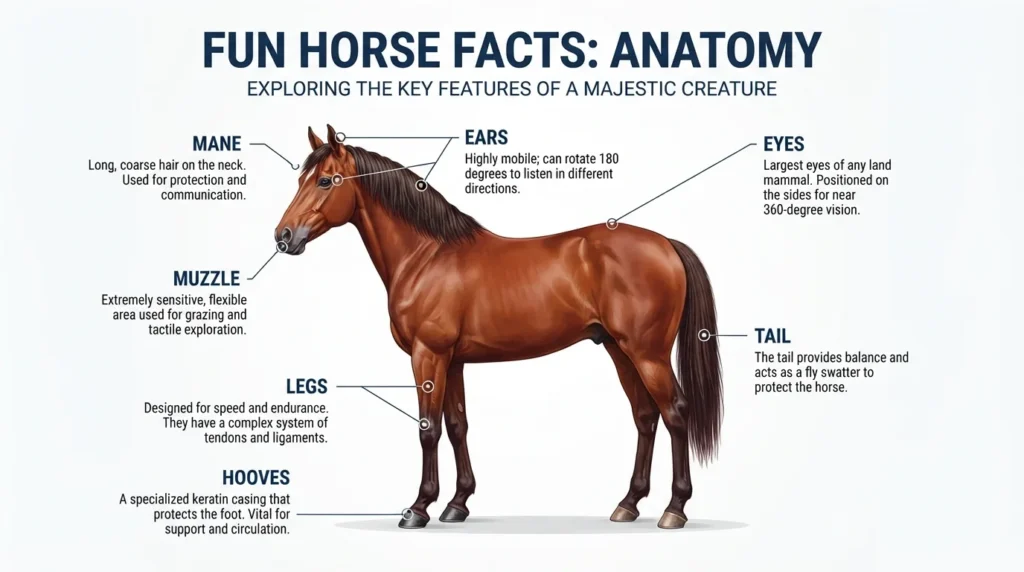
Did you know that horses have the largest eyes of any land mammal? Because their eyes sit on the sides of their head, they enjoy nearly 360-degree vision. This gives them a wide view of their surroundings to watch out for potential danger.
However, they do have two blind spots: directly in front of their nose and right behind their tail. If you walk directly behind a horse without speaking, you might startle them simply because they cannot see you.
Superior Night Vision and Light Sensitivity
Horses can actually see much better in the dark than humans can. Their eyes contain a special reflective layer that amplifies available light during dusk and night.
The downside is that their eyes take longer to adjust when moving from bright sunlight into a dark barn. If your horse hesitates at a dark doorway, they are just waiting for their eyesight to adjust!
Listening with Swiveling Ears
A horse’s ears can rotate almost 180 degrees using 16 individual muscles in each ear. This incredible movement lets them pinpoint exact sounds without turning their whole body.
Even better, a horse’s ears usually point in the direction they are looking. If one ear is pointed forward and the other is pointed backward, the horse is actually paying attention to two different things at once.
The horse’s body is packed with surprising design features that make them built for speed, strength, and continuous movement.
Horses Cannot Breathe Through Their Mouths

Unlike humans and dogs, horses are obligate nasal breathers. This means they can only breathe through their nostrils and cannot breathe through their mouth at all.
A special flap of tissue creates a tight seal over their throat, blocking air from entering through the mouth. This unique structure allows them to graze on grass while continuously sniffing the air for safety.
The Mystery of the Single Horse Toe
When you look at a horse’s hoof, you are actually looking at a single evolved middle toe. Millions of years ago, ancient horse ancestors had four toes on their front feet and three on their back feet.
Over time, horses evolved to run faster on hard ground, losing their extra toes. Today, walking on a hoof is biologically equivalent to a human standing on the tip of their middle fingernail!
They Cannot Vomit
A horse’s digestive system is strictly a one-way street. The muscles at the bottom of their esophagus act like a super-strong valve that prevents food from traveling backward.
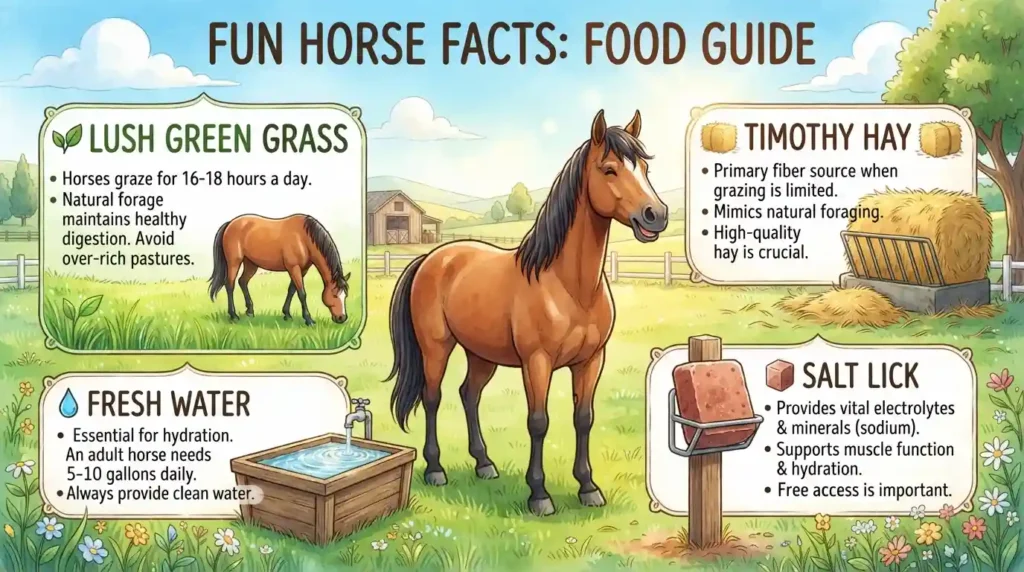
Because horses cannot throw up, digestive issues like colic can become dangerous quickly. This is why proper feeding routines are so vital for keeping horses healthy.
Horses are absolute masters of non-verbal communication. They talk to each other—and to us—using subtle facial expressions and body posture.
Reading Expressions Through Ears and Tail
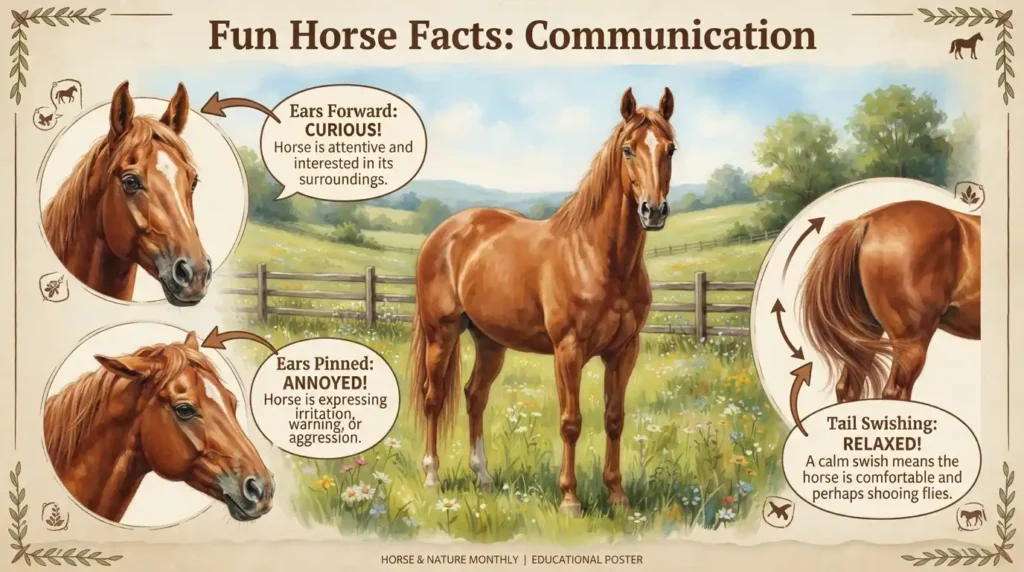
A horse’s mood is written all over its body once you know what to look for. Relaxed ears pointing slightly sideways mean a calm horse, while ears pinned flat against the neck mean annoyance or anger.
Tail swishing can mean frustration or flies, while a high, lifted tail shows excitement. Paying attention to these small clues helps you understand exactly how a horse feels.
The Meaning Behind the Horsy Smile
Have you ever seen a horse curl its upper lip toward the sky and look like it is laughing? This funny expression is called the Flehmen response.
When a horse does this, they are using a special scent organ in their nose to analyze unusual smells. They are not laughing at a joke; they are taking a deeper smell of something interesting in the air!
Unique Horse Sounds and Meanings
Horses use a wide variety of sounds to talk across distances. A loud neigh helps herd members find each other when they are separated.
A soft, low whinny or nicker is a friendly greeting often reserved for trusted companions or human caretakers holding tasty treats.
Sleeping habits in the horse world look very different from our own nightly routines.
Standing Up to Sleep Safely
Horses possess a built-in locking system in their legs called the stay apparatus. This system of tendons and ligaments locks their joints in place so they can sleep standing up without falling over.
This trait evolved as a defense mechanism. By sleeping on their feet, wild horses can instantly bolt away from predators without wasting time scrambling up from the ground.
Do Horses Need Deep REM Sleep?
While horses can snooze on their feet, they cannot get deep REM sleep while standing up. To achieve full muscular relaxation and dream, a horse must lie flat on the ground.
Horses only need about 20 to 30 minutes of deep REM sleep a day. Because lying down makes them vulnerable, they only do it when they feel completely safe in their environment.
Horses are far more intelligent and emotionally complex than many people realize. They remember acts of kindness and form lasting friendships.
Memory That Matches an Elephant
Horses have incredible long-term memories. Studies show that horses can remember individual human faces and remember how those humans treated them in the past.
If a person treats a horse with patience and kindness, the horse will remember that positive bond even after years of separation.
Recognizing Human Emotions
Horses are expert human mood readers. They can distinguish between happy and angry human facial expressions and will even adjust their heart rates based on a person’s stress level.
When you feel nervous around a horse, they pick up on your elevated heart rate and body tension instantly. Remaining calm helps keep your horse calm, too!
MCQs
Test your knowledge on these fun horse facts with this quick quiz!
- What unique body feature allows horses to sleep while standing up?
A. Strong ankle bones
B. Stay apparatus system
C. Extra toe pads
D. Balanced tail weight - Why can’t horses breathe through their mouths?
A. Their tongue blocks the airway
B. They lack lungs suitable for mouth breathing
C. A special tissue flap creates a tight seal over the throat
D. Their teeth are too close together - How many toes did ancient horse ancestors have on their front feet?
A. One
B. Two
C. Four
D. Five - What does it mean when a horse pins its ears flat against its neck?
A. It is feeling sleepy
B. It is listening to a noise behind it
C. It is angry or annoyed
D. It is smelling something unusual - What is the funny lip-curling expression in horses called?
A. Flehmen response
B. Equine grin
C. Snicker curl
D. Whinny tilt - Where are a horse’s two main blind spots located?
A. Left side and right side
B. Directly above their head and under their belly
C. Directly in front of their nose and right behind their tail
D. Near their knees and hooves - How long do horses need deep REM sleep each day?
A. 8 hours
B. 20 to 30 minutes
C. 4 hours
D. 5 minutes
Answer Key
- B
- C
- C
- C
- A
- C
- B
FAQs
Do horses really sleep standing up all the time?
Horses can rest and doze while standing up, but they cannot achieve deep REM sleep this way. They must lie down flat on their sides for short periods to get full restful sleep.
Can horses show affection toward humans?
Yes, horses display affection by nuzzling, leaning softly against people, and resting their heads on their favorite humans. They also remember positive past interactions and show trust around gentle caretakers.
What do horse tail movements mean?
Swishing tails usually signal annoyance with flies or frustration during work. A high, raised tail indicates excitement or energy, while a tucked tail suggests nervousness or cold weather discomfort.
Why do horses produce so much saliva?
Horses produce saliva only when they chew food, creating gallons of it every single day. This saliva neutralizes stomach acid and helps food move smoothly through their long digestive tract.
How fast can the average horse run?
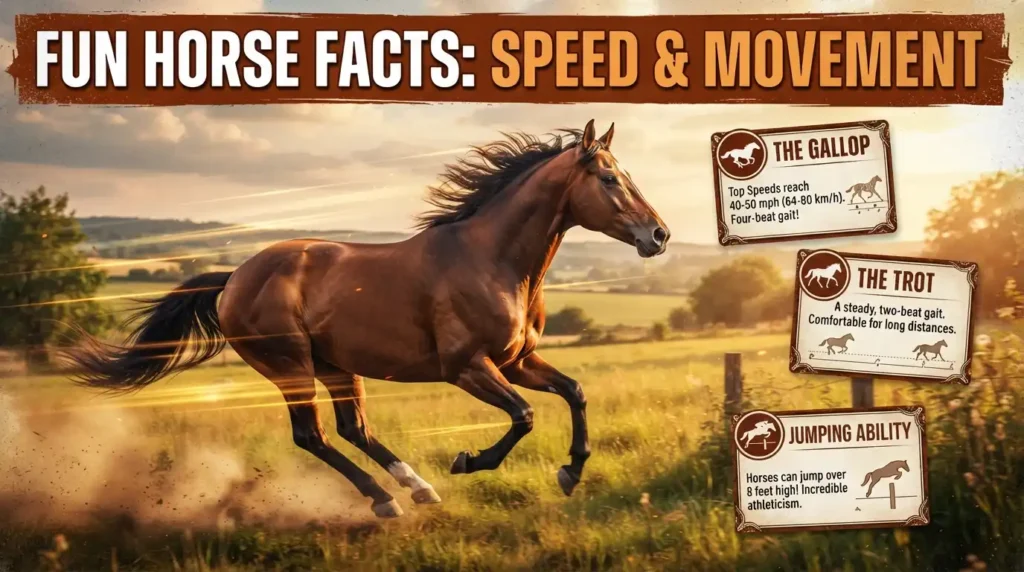
The average horse gallops at around 27 to 30 miles per hour. Racehorses can reach peak speeds over 40 miles per hour during short sprints on open tracks.
How long do horses usually live?
Most domestic horses live between 25 and 30 years with proper care and nutrition. Some ponies and smaller horse breeds can even live past 40 years!
Conclusion
Learning these fun horse facts shows us just how complex, intelligent, and adaptable these animals really are. From their incredible 360-degree vision and unique sleeping habits to their strong emotional memory, horses never cease to amaze us.
Next time you visit a barn or watch horses grazing in a pasture, take a moment to observe their ear movements and subtle body language. You will see a whole world of quiet communication happening right in front of your eyes!
Which of these horse facts surprised you the most? Share this article with a fellow animal lover, or drop your favorite equine story in the comments below!

Asjad Ali is a passionate, fun, and entertainment enthusiast who enjoys discovering interesting, amusing, and engaging content from around the web. Through laughvista.com, Asjad shares lighthearted ideas, entertaining stories, fun facts, jokes, and enjoyable content designed to bring a little more laughter and positivity into everyday life. His goal is to create content that feels natural, relatable, and easy for everyone to enjoy.
With a genuine interest in fun and entertainment, Asjad Ali focuses on creating friendly content for readers of different ages and backgrounds. laughvista.com is built around the idea that a few moments of laughter can brighten anyone’s day. Whether readers are looking for something funny, interesting, or simply entertaining, Asjad aims to make every visit enjoyable, refreshing, and worth coming back to.