

Moose are the largest members of the deer family, famous for their massive palmated antlers, incredible swimming ability, and surprising underwater diving skills. Found across northern pine forests, these gentle giants possess unique adaptations—like heat-sensitive hooves and specialized nose valves—that allow them to thrive in freezing wilderness environments.
Have you ever seen a creature so massive that it looks like it stepped right out of a prehistoric forest?
If you have ever encountered a moose in the wild, you know the feeling of pure awe that comes with seeing one of these gentle giants up close. These incredible animals are packed with surprising secrets, fascinating abilities, and bizarre behaviors that most people never learn about.
Get ready to discover the most fascinating fun moose facts that reveal what makes these northern forest giants truly extraordinary creatures!
The Basics: What Makes a Moose a Moose?
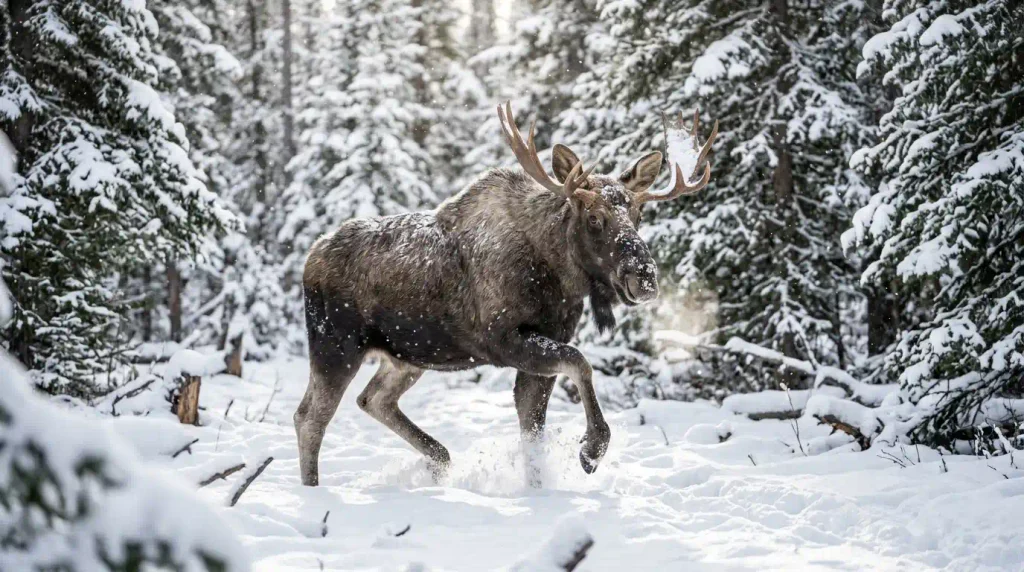
Before we look at their weird habits, let us talk about what these animals actually are. Many people confuse them with elk or standard deer, but moose stand in a category completely of their own.
The Undisputed Giants of the Deer Family
Did you know that moose are actually the largest species in the entire deer family? A full-grown adult male can stand up to seven feet tall at the shoulder, not even counting his massive head and antlers. When you stand next to one, their sheer size feels almost unreal, easily towering over most fully grown adult humans.
Moose vs. Elk: Clearing Up the Name Confusion
If you travel to Europe, people will call a moose an “elk,” which gets very confusing for North American travelers. In North America, an elk and a moose are two entirely different animals with very different body shapes. The name “moose” actually comes from the Indigenous Algonquian language word meaning “twig eater.”
Where Do These Gentle Giants Live?
Moose love cold climates and are perfectly designed to live in northern regions around the world. You can find thriving populations across Canada, Alaska, the northern United States, Scandinavia, and Russia. They thrive in snowy pine forests, chilly lake regions, and marshy wetlands where food is always abundant.
Mind-Blowing Physical Adaptations
Every inch of a moose is specially engineered by nature to help it survive freezing winters and deep mud. Their bodies might look a bit awkward at first glance, but every single feature serves a brilliant purpose.
Antlers That Grow at Record Speed
Male moose, known as bulls, grow some of the largest and fastest-growing bone structures in the entire animal kingdom. Their antlers can span over six feet from tip to tip and weigh up to sixty pounds! Even more amazing is that these giant antlers grow, shed, and completely regrow every single year.
- Spring: Antlers sprout under soft, velvety skin.
- Summer: They reach their full size and harden.
- Autumn: The velvety skin peels away for mating season.
- Winter: The antlers shed completely to save energy.
Hair Built Like a High-Tech Winter Coat
A moose coat looks rough on the outside, but it is actually a masterpiece of natural thermal insulation. Each individual hair is completely hollow inside, trapping air to keep the animal warm in freezing temperatures. This hollow hair also acts like a built-in life jacket, helping them float effortlessly when swimming across deep lakes.
Long Legs Built for Deep Snow and Mud
Have you ever wondered why moose have such long, skinny legs under such heavy bodies? Those long legs allow them to stride easily through knee-deep snow without wasting valuable body energy. Their wide, split hooves spread out like snowshoes, keeping them from sinking into soft forest mud or marshland.
Surprising Aquatic Superpowers
Most people think of moose strictly as land animals, but they are actually world-class water lovers. When summer temperatures rise, these giant mammals head straight for the nearest body of water.
Deep Sea Divers of the Forest
Believe it or not, moose are incredible swimmers and can dive underwater up to twenty feet deep! They submerge themselves completely to munch on nutrient-rich plants growing on the bottoms of lakes and ponds. Special valves in their nostrils automatically close when they dive, keeping water completely out of their lungs.
Swimming Marathons Across Chilly Lakes
A moose does not just splash around in shallow water; it swims with impressive speed and endurance. They can swim at speeds of up to six miles per hour, easily keeping pace with a team of humans rowing a canoe. Calves begin swimming just a few days after birth, following their mothers across wide rivers without any fear.
Why Moose Need Aquatic Vegetation
Forest leaves and twigs are great, but they do not contain enough sodium for a massive mammal’s diet. Water plants like pond lilies and kelp are packed with natural salts that keep the animal healthy. A single adult can eat over fifty pounds of aquatic vegetation in a single day during peak summer months.
Key Differences Between Male and Female Moose
Understanding the physical differences between male and female moose makes spotting them in the wild much easier:
- Weight: Male bulls weigh between 900 and 1,500 pounds, while female cows weigh between 700 and 1,100 pounds.
- Antlers: Only male bulls grow antlers. Female cows never grow them.
- Height: Males are taller, reaching 6.5 to 7.5 feet at the shoulder, while females stand around 5.5 to 6.5 feet tall.
- Autumn Behavior: Bulls spend autumn competing for mates, while cows focus on protecting and feeding their young calves.
Weird Behaviors and Unique Traits
Beyond their physical size, moose exhibit some of the most unusual behaviors in the animal world. From strange sounds to surprising food cravings, their daily routines are filled with fun surprises.
What Is That Flap of Skin Under Their Neck?
If you look beneath a moose’s chin, you will notice a floppy piece of skin covered in fur called a “dewlap” or “wattle.” Scientists are still not entirely sure what it does, but it likely helps spread scent during the autumn mating season. Bulls typically have larger and more prominent dewlaps than cows, making it a key visual feature.
Licking Cars for Winter Salt
In areas with heavy winter snowfall, highway crews spread salt on icy roads to keep drivers safe. Moose love the taste of sodium so much that they will routinely approach parked cars to lick the road salt right off the metal! This strange habit often causes unusual traffic delays in places like Canada and Alaska.
The Strange Sound of a Mating Call
During the autumn mating season, known as the rut, bulls and cows make incredibly loud and bizarre vocalizations. Cows produce a long, mournful wail that can carry over a mile through dense forest trees. Bulls respond with deep, rhythmic grunts while rubbing their antlers against trees to show off their strength.
What Do Moose Eat? (A Giant’s Diet)
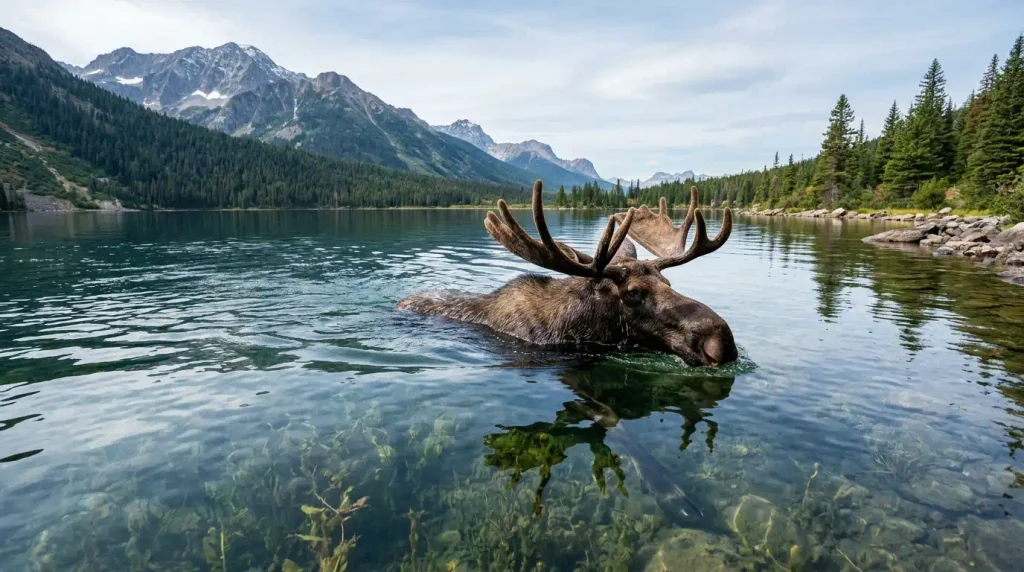
Maintaining a body weight of over one thousand pounds requires a massive amount of daily calories. Despite their enormous size, these giants are strict herbivores that eat a wide variety of plant life.
The Daily Calorie Crunch
An adult moose needs to consume roughly thirty to seventy pounds of food every single day just to maintain its weight. In the summertime, they feast on green leaves, fresh twigs, soft bark, and lush aquatic vegetation. During harsh winters, their options shrink, forcing them to strip pine needles and woody branches off trees.
Specialized Digestive Systems
Like cows, moose are ruminants, meaning they have a complex stomach split into four separate chambers. This multi-stage digestive system allows them to break down tough wood fibers that other animals cannot digest. They spend hours resting and chewing their cud, re-digesting food they gathered earlier in the day.
Trees Are Their Favorite Snack
Moose love feeding on specific tree species, especially willow, birch, aspen, and balsam fir trees. They use their strong, flexible upper lips to grab branches and strip off all the leaves in a single motion. Their lips act almost like a soft hand, allowing them to pick out the tenderest leaves while avoiding sharp thorns.
Moose Calves: Growing Up Giant
Watching a young calf learn how to navigate the wilderness is both heart-warming and entertaining. They grow remarkably fast, transforming from awkward babies into heavy woodland giants within just one year.
Born Ready to Move
Moose cows give birth in late spring, usually producing a single calf or occasionally twins if food was plentiful. A newborn calf weighs around thirty pounds at birth but can stand up and walk within just a few hours. By their second week of life, calves can easily run fast enough to keep up with their mother’s stride.
Fierce Motherly Protection
A mother moose is one of the most protective and dangerous mothers in the entire wilderness. She will aggressively attack grizzlies, wolves, or humans if she feels her young calf is threatened in any way. Wildlife experts always warn observers to give mother cows extra space during the spring and summer months.
Rapid Growth Rate
During their first few months, calves drink nutrient-rich milk and gain weight faster than almost any other land mammal. A calf can gain up to two to three pounds of pure muscle and bone weight every single day! By the time their first winter arrives, the young calf often weighs over four hundred pounds.
Survival and Predators: Life in the Wild
Living in northern wilderness regions means sharing space with powerful predators and tough weather conditions. Moose rely on their size, speed, and sharp hooves to defend themselves against potential threats.
How Moose Defend Themselves
While antlers look intimidating, a moose’s primary defensive weapon is actually its powerful front hooves. They can kick out with extreme force in any direction, easily injuring or killing predators like wolves or cougars. Even a full pack of wolves will think twice before attacking a healthy, fully grown adult moose.
Natural Predators of the Giant
Wolf packs and brown bears are the primary natural predators that hunt moose in the wild. Predators typically target vulnerable individuals, such as newborn calves, sick animals, or older individuals. In marine regions, killer whales have even been known to prey on swimming moose traveling between coastal islands!
Surviving Heatwaves: Their Sneaky Weakness
Moose are so heavily insulated for winter cold that high summer temperatures cause them severe physical distress. They begin to suffer heat stress at temperatures above fifty-four degrees Fahrenheit during cold winter months. To cool off in summer, they submerge in cold lakes or lie down in thick, shady mud pits.
Fun Moose Facts: Quick Sparklers!.
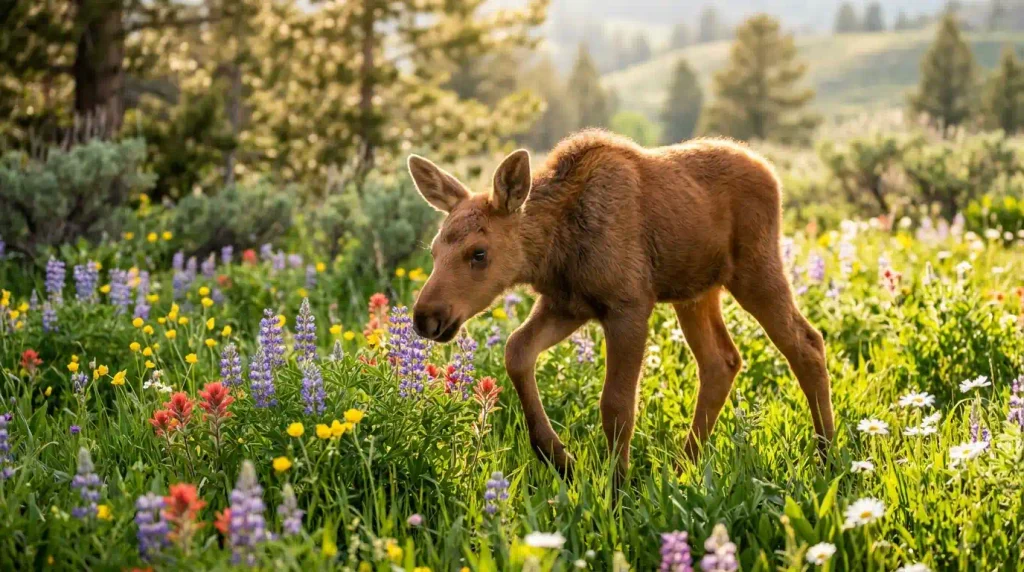
Looking for some fast, impressive trivia to share with your friends at your next gathering? Here is a quick collection of bite-sized fun moose facts that highlight just how unique these animals are!
- Poor Eyesight: Moose have terrible vision and struggle to see stationary objects just a few yards away.
- Super Smell: What they lack in eyesight, they make up for with an extraordinary sense of smell.
- Speedy Runners: Despite their bulky shape, they can sprint up to thirty-five miles per hour on land.
- Sensitive Antlers: Growing antlers are covered in soft velvet filled with active nerves and blood vessels.
- Lone Rangers: Unlike elk or deer, moose prefer a solitary lifestyle rather than living in large herds.
- Lifespan: In the wild, a healthy moose typically lives between fifteen and twenty years.
Practice Exercises
Test your knowledge of these incredible animals with this quick interactive practice quiz!
1. How deep can a moose dive underwater to find plants?
A. 5 feet
B. 10 feet
C. 20 feet
D. 50 feet
2. What does the word “moose” mean in the Algonquian language?
A. Forest King
B. Twig Eater
C. Heavy Swimmer
D. Silent Walker
3. What helps a moose float while swimming?
A. Air-filled hooves
B. Hollow hair
C. Large lungs
D. Wide chest
4. What is the loose skin under a moose’s chin called?
A. Wattle or dewlap
B. Crest
C. Mane
D. Flange
5. How fast can a moose run on land?
A. 15 mph
B. 25 mph
C. 35 mph
D. 50 mph
6. Which sea predator has been known to hunt swimming moose?
A. Great white shark
B. Killer whale
C. Leopard seal
D. Giant squid
7. Why do moose lick cars during winter?
A. Like shiny cars
B. Lick road salt off cars
C. They want to warm their tongues
D. They mark their territory
8. How much weight can a young moose calf gain each day?
A. 0.5 pounds
B. 2 to 3 pounds
C. 5 to 6 pounds
D. 10 pounds
9. What is a male moose called?
A. Buck
B. Stag
C. Bull
D. Ram
10. Which sense is weakest in a moose?
A. Hearing
B. Touch
C. Smell
D. Eyesight
Answer Key
- C — 20 feet
- B — Twig Eater
- B — Hollow hair
- A — Wattle or dewlap
- C — 35 mph
- B — Killer whale
- B — They lick road salt off cars
- B — 2 to 3 pounds
- C — Bull
- D — Eyesight
FAQs
What makes moose such good swimmers?
Moose are exceptional swimmers because their hollow hair acts like a built-in life jacket, providing incredible natural buoyancy. Additionally, their wide hooves push massive amounts of water, allowing them to swim miles through frigid lakes effortlessly.
Do female moose grow antlers?
No, female moose (cows) do not grow antlers at all. Antlers are grown exclusively by male moose (bulls) each spring to display strength and compete for mates during the autumn breeding season.
How do moose survive extremely cold winters?
Moose survive severe freezing weather thanks to a dense coat of hollow, heat-trapping hair and thick skin. Their long legs allow them to navigate deep snow drifts without exhausting their vital energy reserves.
Are moose aggressive toward humans?
Moose are generally calm, but they can become aggressive if threatened, cornered, or surprised. Mother cows with calves and rutting bulls in autumn are especially protective and should always be given plenty of distance.
What do moose eat during the freezing winter months?
During winter, when green leaves and aquatic plants vanish, moose eat woody tree bark, twigs, and evergreen needles. Their four-chambered stomach allows them to digest tough woody fibers that most other animals cannot process.
Conclusion
Exploring these fun moose facts shows us just how magnificent and unique these forest giants truly are. From underwater diving to rapid antler growth, they are perfectly engineered to thrive in some of the harshest environments on Earth.
Whether you are an avid wildlife enthusiast or just love learning about nature’s weirdest creatures, the moose never fails to amaze. Next time you visit the northern woods, keep your eyes open for these gentle giants!
Have you ever spotted a moose in the wild or learned a surprising fact about them? Share your thoughts and favorite wildlife stories with your friends today!

Asjad Ali is a passionate, fun, and entertainment enthusiast who enjoys discovering interesting, amusing, and engaging content from around the web. Through laughvista.com, Asjad shares lighthearted ideas, entertaining stories, fun facts, jokes, and enjoyable content designed to bring a little more laughter and positivity into everyday life. His goal is to create content that feels natural, relatable, and easy for everyone to enjoy.
With a genuine interest in fun and entertainment, Asjad Ali focuses on creating friendly content for readers of different ages and backgrounds. laughvista.com is built around the idea that a few moments of laughter can brighten anyone’s day. Whether readers are looking for something funny, interesting, or simply entertaining, Asjad aims to make every visit enjoyable, refreshing, and worth coming back to.